Innovative Manufacturer of Honeycomb and MI Heating Products
Innovative Manufacturer of Honeycomb and MI Heating Products
Product Details:
Payment & Shipping Terms:
|
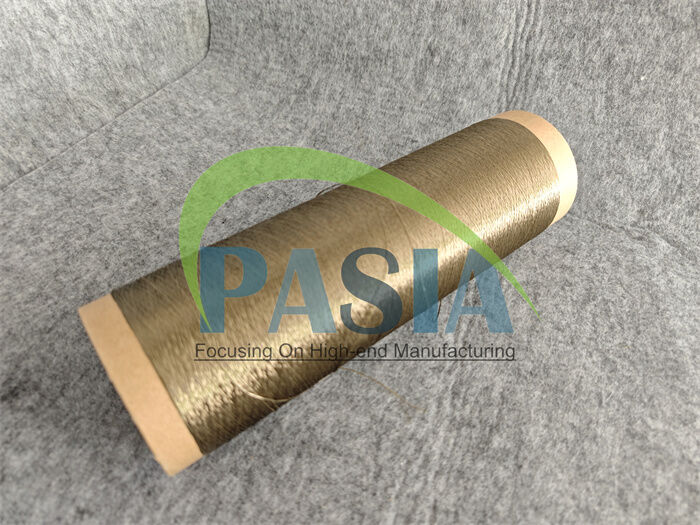
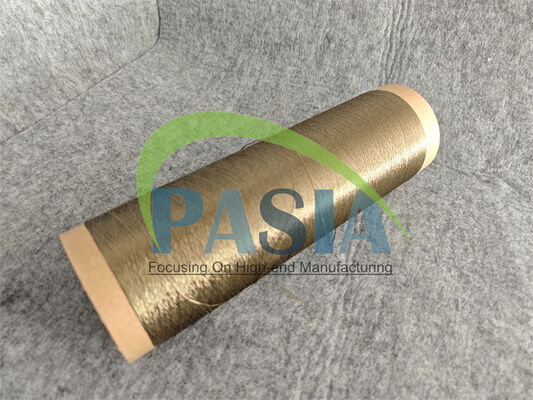
| Material: | Basalt Stone Fiber | Diameter: | 13 Micron |
|---|---|---|---|
| Linear Density: | 2400 Tex | Sizing: | Silane |
| Application: | Weaving Or Filament Winding | Compatible With: | General Resin |
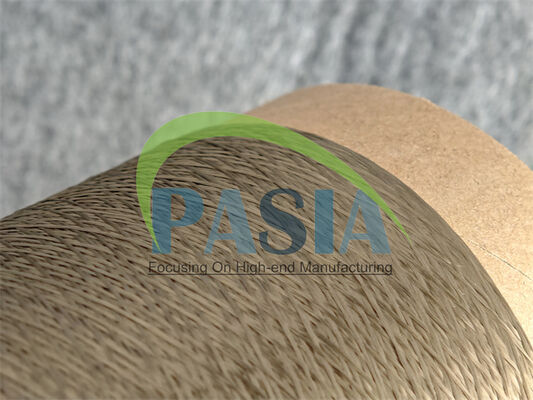
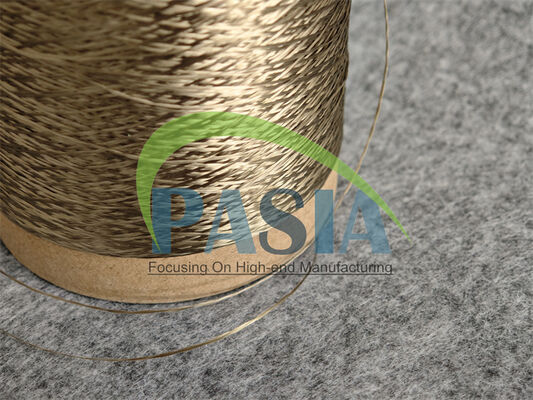
High Performance Basalt Continuous Fiber Roving for Composites & Construction
Basalt fiber roving is a continuous, unidirectional bundle of parallel basalt filaments, manufactured through an advanced melting and extrusion process from natural volcanic rock. This untwisted roving is engineered to serve as the foundational reinforcement material for high-performance composites across construction, automotive, aerospace, marine, and renewable energy sectors.
Spcifications:
| Item No. | Linear Density(Tex) |
Tolerance (Tex) |
Sizing (%) |
Maximum Moisture (%) |
Diameter (μm) |
| PBFR7-FV-800 | 800 | ±64 | 0.4 | 0.2 | 7 |
| PBFR9-PP-1100 | 1100 | ±88 | 0.4 | 0.2 | 9 |
| PBFR9-PV-2400 | 2400 | ±192 | 0.4 | 0.2 | 9 |
| PBFR13-GC-1200 | 1200 | ±96 | 0.4 | 0.2 | 13 |
| PBFR13-GC-2400 | 2400 | ±192 | 0.4 | 0.2 | 13 |
Normally, direct roving is much better for filament winding, pultrusion and weaving fabrics.
Key Technical Specifications
Parameter Value Range
| Filament Diameter | 5 μm – 31 μm |
| Linear Density | 9tex-9600tex |
| Tensile Strength (Impregnated Strand) | 2,900 – 4,800+ MPa (ASTM D2343) |
| Tensile Modulus | 86 – 110 GPa |
| Elongation at Break | 2.6% – 3.5% |
| Service Temperature Range (Long-term) | –260°C to +680°C |
| Short-term Heat Resistance Up to | 1,000°C |
| Moisture Absorption | <0.1% |
Data based on the regular products of Pasia Industries and ASTM D2343 / D3822 standard tests
Core Properties & Advantages
1. Superior Mechanical Strength
Basalt fiber roving exhibits exceptional tensile strength, typically 7–25% higher than that of E-glass fiber, with tensile modulus exceeding that of standard glass fibers by up to 15%. In many technical parameters, basalt roving surpasses E-glass and S-glass fibers while offering a cost-effective alternative to carbon fiber.
2. Exceptional Thermal Resilience
Engineered for extreme environments, basalt roving maintains structural integrity from cryogenic temperatures as low as –260°C up to +680°C for continuous service, with short-term tolerance reaching 1,000°C. This thermal stability outperforms polymer-based reinforcements and makes it suitable for fire-resistant applications.
3. Chemical & Environmental Durability
The material demonstrates outstanding resistance to alkalis, acids, salts, and other aggressive media across a wide pH range (2–14). Basalt fiber roving is naturally dielectric, non-magnetic, and exhibits no electrochemical corrosion—a critical advantage for marine, chemical processing, and EMI-sensitive applications.
4. Sustainability & Eco-Friendliness
Derived from abundant volcanic rock, basalt fiber requires no chemical additives during production and is fully recyclable. It is REACH and RoHS compliant, non-toxic, and increasingly adopted as a green alternative to traditional synthetic reinforcements. UV stability ensures 98% strength retention after 3,000 hours of accelerated weathering.
Applications
Basalt fiber roving is widely utilized across multiple demanding industries:
| Application Area | Specific Uses |
| Composite Manufacturing | Pultrusion profiles, filament winding (CNG tanks, chemical pipes), SMC/BMC, prepregs, and woven fabrics |
| Construction & Infrastructure | Concrete reinforcement, structural strengthening wraps, basalt rebar, geogrids for slope stabilization, cementitious overlays |
| Automotive & Transportation | Lightweight composite components, brake pads, body panels, structural reinforcements |
| Aerospace & Marine | High-strength composite structures, shipbuilding, wind turbine blades |
| Specialized Textiles | Fire curtains, high-temperature filtration fabrics, electrical insulation materials, EMI shielding |
Applications validated through ASTM testing and industry adoption
How Basalt Fiber Roving Compares
| Property | Basalt Fiber | E-Glass | S-Glass | Carbon Fiber |
| Density (g/cm³) | 2.65 | 2.54-2.57 | 2.54 | 1.78 |
| Tensile Strength (MPa) | 3,800-4,800+ | 3,100-3,800 | 4,020-4,650 | 3,500-6,000 |
| Elastic Modulus (GPa) | 86-110 | 72.5-75.5 | 83-86 | 230-600 |
| Max Service Temp (°C) | 650+ | 380 | 600 | 500 |
| Chemical Resistance | Excellent | Moderate | Moderate | Excellent |
| Cost Level | Moderate | Low | Moderate-High | High |
Comparative data compiled from multiple sources
Processing & Handling
Basalt fiber roving is compatible with standard composite manufacturing processes:
· Pultrusion – Ideal for continuous profile production
· Filament Winding – Suitable for pressure vessels, pipes, and tanks
· Resin Transfer Molding (RTM) – Works with epoxy, vinyl ester, polyester, and phenolic resins
· Woven Fabric Production – Can be woven into geogrids, tapes, and multi-axial fabrics
· Compression Molding – Compatible with SMC/BMC processes
Available in direct roving (zero catenary), assembled roving, and multi-end configurations to meet diverse production requirements.
Quality Assurance
Each batch of basalt fiber roving undergoes rigorous quality control:
· Laser diameter monitoring during fiber drawing
· ASTM D2343 tensile testing (impregnated strand)
· GOST-compliant physical property verification
· ISO 9001-certified manufacturing processes
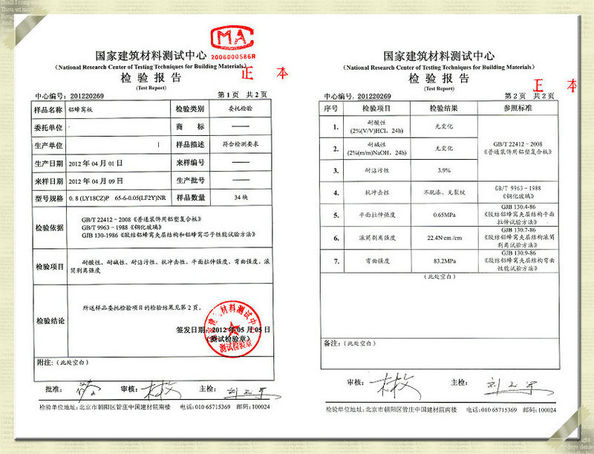
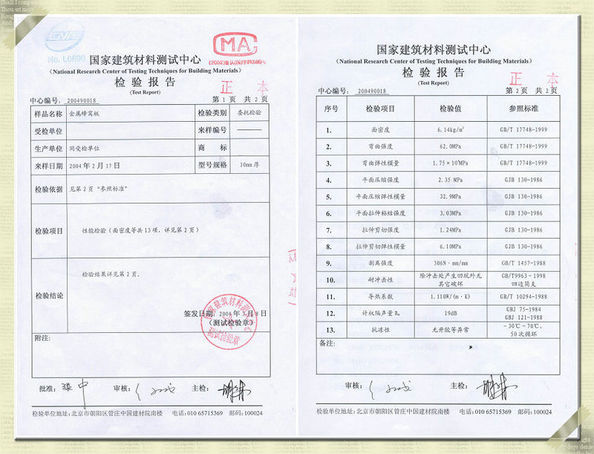
Third-party testing and sample evaluation are available upon request.