Innovative Manufacturer of Honeycomb and MI Heating Products
Innovative Manufacturer of Honeycomb and MI Heating Products
Product Details:
Payment & Shipping Terms:
|
| Process: | Automatic Laser Welding | Material: | Haynes 214 |
|---|---|---|---|
| Industry: | Turbine | Usage: | Seal |
| Method: | Laser | Grade: | 214 |
| Advantage: | Very Low Cross Coupling | Application: | Aircraft Engine Part |
Honeycomb Haynes 214 1.0 mm Thick Automatic Laser Welding Seal Gas Turbine Seal
1. Material Properties
Haynes 214 is a nickel‑chromium‑aluminium‑iron superalloy, strengthened by unique yttrium micro‑alloying. It exhibits outstanding oxidation resistance at extreme temperatures up to 1260°C, along with excellent resistance to carburisation and chlorine‑induced corrosion. With a density of 8.05 g/cm³ and a modulus of elasticity of 217 kN/mm², Haynes 214 is widely recognised as an ideal material for manufacturing honeycomb seal structures in gas turbines.
2. Automatic Laser Welding Process
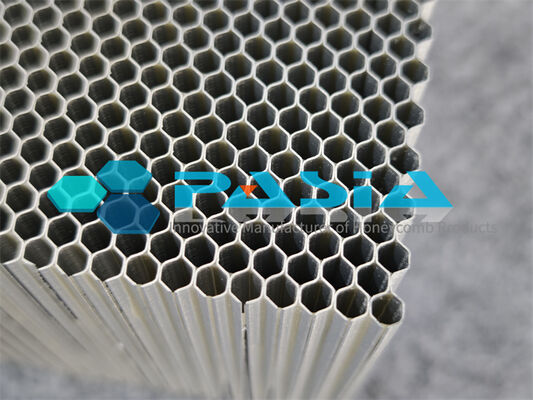
This product is manufactured using advanced automatic laser welding technology. Laser welding, which employs a high‑energy‑density laser beam as the heat source, offers distinct advantages including high energy density, deep penetration, high efficiency, precision, and excellent controllability. The 1.0 mm thick Haynes 214 foil is precision‑formed into a continuous hexagonal honeycomb cell structure. Only a few manufacturers worldwide, equipped with vacuum brazing and automatic laser welding facilities, can achieve efficient mass production of honeycomb products. The 214® RTW™ welding wire supplied by Haynes International features a specially treated surface, ensuring smooth wire feeding in automatic welding equipment and reducing contact‑tip wear.
3. Working Principle
The honeycomb seal is a critical flow‑control component in gas turbines. Its operating principle is to maintain an extremely small clearance between the rotating seal teeth and the stationary honeycomb liner. The honeycomb cells significantly reduce leakage flow through throttling and vortex effects on the gas stream. During operation, inevitable frictional contact occurs between the seal teeth and the honeycomb. The Haynes 214 honeycomb structure offers good abradability, limiting thermal loads during rubbing and preventing damage to the seal teeth. Depending on the installation position, honeycomb seals are mainly classified into tip seals, diaphragm seals, and shaft‑end seals.
4. Applications
This product is primarily used in hot‑section sealing assemblies of aero‑engines, industrial gas turbines, and steam turbines. Specific applications include blade tip seals to reduce aerodynamic losses and improve efficiency; the honeycomb structure also provides moisture‑removal effects, protecting blades from steam erosion. Beyond gas turbines, Haynes 214 honeycomb seals are also widely employed in flame shields, combustors, catalytic converters, medical waste incineration systems, and other static applications where oxidation resistance is critical.
5. Application Cases
In academic research, honeycomb liner materials made of Haynes 214 sheet brazed with BNi‑5 nickel‑based filler metal have been systematically studied for their high‑speed rubbing performance. Experiments show that the brazing process significantly affects mechanical properties, especially after high‑temperature exposure at 1000°C. In practical engineering, honeycomb seals made of Haynes 214 have been successfully applied in the engines of the U‑2 aircraft, the Ukrainian GT25000 gas turbine, and the Chinese J‑10 fighter jet engines. With continuous improvements in laser micro‑welding procedures for ultra‑thin nickel‑based superalloys, this technology promises even broader application prospects in high‑end equipment such as gas turbines.
Engineered for Precision – Technical Specifications
Our honeycomb seal product line supports the following flexible specifications:
| Parameter | Specification Range |
| Material Options | Stainless Steel, Haynes 214, Hastelloy X, High-Temperature Alloy, Carbon Steel |
| Honeycomb Cell Size | 0.8 mm – 5.6 mm (0.8 mm, 1.6 mm, 2.0 mm, 3.2 mm, 4.2 mm, 5.6 mm, etc.) |
| Cell Wall Thickness | 0.08mm, 0.1mm, 0.13 mm, 0.15 mm, 0.2 mm (customizable) |
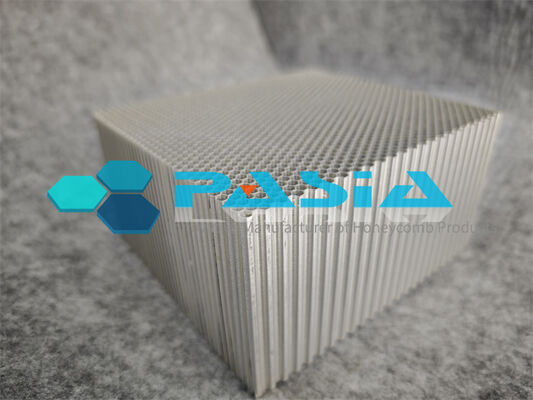
| Product Forms | Rings, Segments, Strips, Rectangular Sheets etc |
| Manufacturing Processes | Automatic Laser Welding, Vacuum Brazing etc |
Advantages
| 1 | Very low cross coupling |
| 2 | Higher direct damping that labyrinth seals |
| 3 | More forgiving than labyrinth seals in the event of a rotor-stator rub |
| 4 | Variety of materials available to serve a wide range of applications |
| 5 | Capable of sustaining higher temperatures than conventional labyrinth seals |