Innovative Manufacturer of Honeycomb and MI Heating Products
Innovative Manufacturer of Honeycomb and MI Heating Products
Product Details:
Payment & Shipping Terms:
|
| Material: | Natural Basalt Stone | Fiber Diameter: | 13 Micron |
|---|---|---|---|
| Chopping Length: | 3mm | Sizing: | Silane |
| Reinforcing: | Phenolic | Application: | Friction Material |
Basalt Fiber Chopped Strands 3mm 6mm 12mm Silane-sized for Concrete Reinforcement with High Tensile Strength Alkali Resistance and Corrosion Resistance
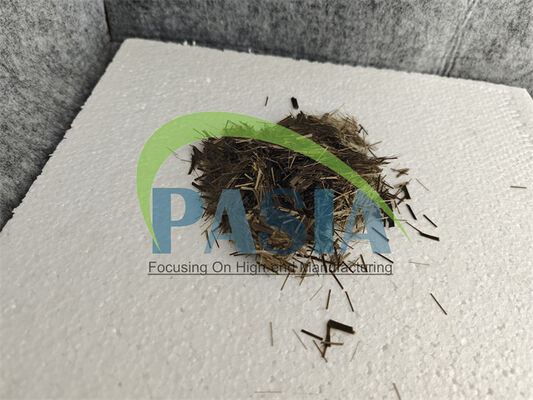
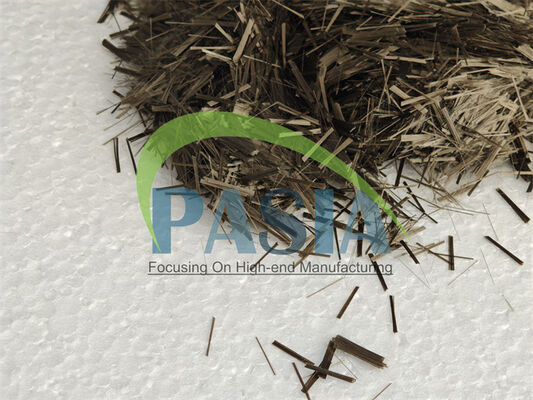
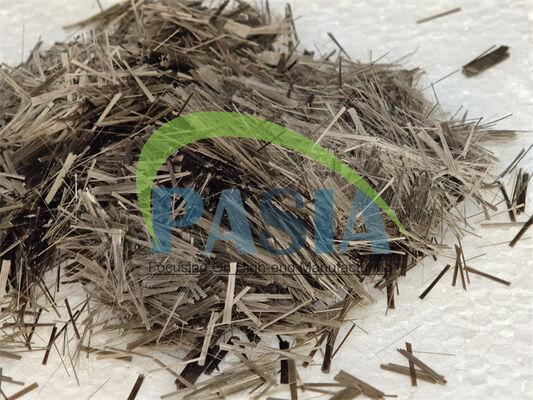
Basalt fiber chopped strands are produced by cutting continuous basalt fiber filaments (or pretreated basalt roving) into precise lengths, with each strand coated with a silane-based sizing agent specially formulated for cement and concrete applications. The fibers are drawn from natural basalt rock, a volcanic mineral material that is melted at approximately 1450–1500°C and processed into continuous filaments through platinum-rhodium alloy bushings. Unlike organic fibers or glass fibers, basalt fiber offers a unique combination of high tensile strength, alkali resistance, and long-term durability in the highly alkaline environment of cementitious matrices.
The silane sizing agent serves a dual function: it enhances the bond between the fiber surface and the cement matrix, and it protects the fiber surface from alkaline attack during the service life of the concrete. Surface treatment with aminosilane coupling agents increases the surface roughness of the fibers, improving mechanical interlocking and chemical adhesion at the fiber-matrix interphase. This results in more effective load transfer and crack-bridging performance in concrete.
---
Silane Sizing: Function and Mechanism
The silane sizing agent applied to these chopped strands is a critical component that differentiates construction-grade basalt fiber from general-purpose fiber. Its primary functions include:
· Enhanced Interfacial Bonding: Silane coupling agents form covalent bonds with both the basalt fiber surface (through silanol groups) and the cement hydration products, creating a strong chemical bridge at the fiber-matrix interface. This significantly improves the efficiency of stress transfer between the concrete matrix and the reinforcing fibers.
· Alkali Protection: The dense silane film on the fiber surface acts as a barrier against alkaline pore solutions in concrete, reducing the rate of fiber degradation and maintaining long-term mechanical performance.
· Dispersion Improvement: Properly sized fibers separate more easily during mixing, reducing agglomeration and ensuring uniform distribution throughout the concrete mix.
· Matrix Compatibility: Silane sizing is specifically compatible with cement and concrete matrices, as confirmed by manufacturer technical data for wet or dry chopped strands used in premix technologies.
---
Performance Advantages in Concrete Reinforcement
1 High Tensile Strength
Basalt fiber chopped strands exhibit tensile strength in the range of 2,000–4,840 MPa, significantly higher than that of typical PVA fibers (approximately 900 MPa) and comparable to certain grades of carbon fiber. This high tensile strength enables the fibers to effectively bridge micro-cracks in concrete and carry tensile stresses after the matrix has cracked.
2 Alkali Resistance
Concrete pore solutions are highly alkaline (pH typically 12.5–13.5). Basalt fiber demonstrates superior alkali resistance compared to E-glass fiber, retaining at least 75% of its mechanical properties after alkaline exposure. The silane sizing further enhances this resistance by forming a protective barrier on the fiber surface. This makes basalt fiber chopped strands particularly suitable for reinforcing concrete, mortar, and cement-based composites where steel reinforcement would corrode.
3 Corrosion Resistance
Basalt fiber is inert to acids, alkalis, salts, and sulfide gases, providing corrosion-proof performance in harsh environments including marine structures, chemical plants, and sewage treatment facilities. Unlike steel reinforcement, basalt fiber does not rust or degrade through electrochemical corrosion processes.
4 Crack Resistance and Durability
When properly dispersed, chopped basalt fibers form a three-dimensional reinforcement network within the concrete matrix that:
· Restrains the initiation and propagation of plastic shrinkage cracks
· Improves flexural strength and toughness
· Enhances impact resistance and fatigue performance
· Increases the durability of concrete elements exposed to cyclic loading
Research has shown that incorporating basalt fiber at volume fractions of 0.1%–0.3% can increase compressive strength by up to 24% and significantly improve flexural and tensile properties.
5 Thermal Compatibility
The thermal expansion coefficient of basalt fiber is close to that of concrete, which minimizes differential thermal stresses at the fiber-matrix interface and reduces the risk of cracking under temperature variations. Basalt fiber also has a broad service temperature range (−269°C to +700°C), making it suitable for both ambient and high-temperature applications.
General Specifications
| BCS13-FP-3 | |
| BCS | Basalt Chopped Strands |
| Fiber Diameter (Average) | 13 micron |
| Chopping Length | 3 mm |
| Sizing System | Silane |
| Package | 25kg/composite bag, 800-1000kg/ plywood pallet |
| Resin Compatible | Phenolic |
| Application | Friction |
| BCS13-FP-6 | |
| BCS | Basalt Chopped Strands |
| Fiber Diameter (Average) | 13 micron |
| Chopping Length | 6 mm |
| Sizing System | Silane |
| Package | 25kg/composite bag, 800-1000kg/ plywood pallet |
| Resin Compatible | Phenolic |
| Application | Friction |
| BCS13-CG-30 | |
| BCS | Basalt Chopped Strands |
| Fiber Diameter (Average) | 13 micron |
| Chopping Length | 30 mm |
| Sizing System | Silane |
| Package | 25kg/composite bag, 800-1000kg/ plywood pallet |
| Resin Compatible | Epoxy, polyester, vinyl ester |
| Application | Chopped strand mat |
| BCS13-NG-50 | |
| BCS | Basalt Chopped Strands |
| Fiber Diameter (Average) | 13 micron |
| Chopping Length | 50 mm |
| Sizing System | Silane |
| Package | 25kg/composite bag, 800-1000kg/ plywood pallet |
| Resin Compatible | Epoxy, polyester, vinyl ester |
| Application | Needle mat |
| BCS13-NG-90 | |
| BCS | Basalt Chopped Strands |
| Fiber Diameter (Average) | 13 micron |
| Chopping Length | 90 mm |
| Sizing System | Silane |
| Package | 25kg/composite bag, 800-1000kg/ plywood pallet |
| Resin Compatible | Epoxy, polyester, vinyl ester |
| Application | Glue or needle bonding for composite nonwoven |
| BCS16-GP-12 | |
| BCS | Basalt Chopped Strands |
| Fiber Diameter (Average) | 16 micron |
| Chopping Length | 12 mm |
| Sizing System | protection |
| Package | 25kg/composite bag, 800-1000kg/ plywood pallet |
| Resin Compatible | PP |
| Application | GMT |
| BCS23-CC-15 | |
| BCS | Basalt Chopped Strands |
| Fiber Diameter (Average) | 23 micron |
| Chopping Length | 15 mm |
| Sizing System | Silane |
| Package | 25kg/composite bag, 800-1000kg/ plywood pallet |
| Compatible with | Concrete |
| Application | Construction |
| BCS13-BB-4.5 | |
| BCS | Basalt Chopped Strands |
| Fiber Diameter (Average) | 13 micron |
| Chopping Length | 4.5 mm |
| Sizing System | Silane |
| Package | 25kg/composite bag, 800-1000kg/ plywood pallet |
| Compatible with | Bitumen |
| Application | Construction |