Innovative Manufacturer of Honeycomb and MI Heating Products
Innovative Manufacturer of Honeycomb and MI Heating Products
Product Details:
Payment & Shipping Terms:
|
| Surface: | Aramid Single Tow Prepreg In Epoxy Resin | Core: | Commercial Nomex Honeycomb Core |
|---|---|---|---|
| Thickness: | 10 Mm | Weight: | 60 G/m2 |
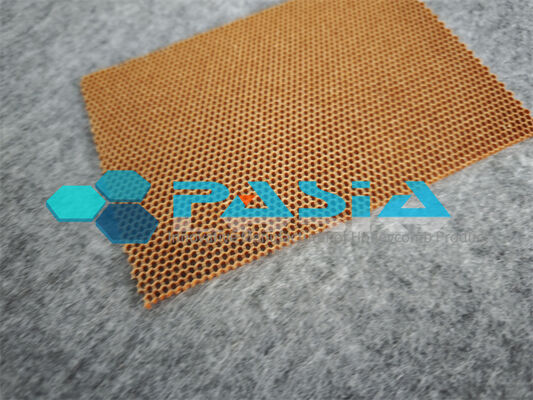
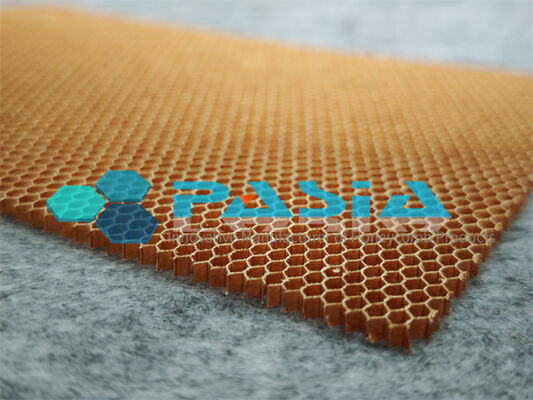
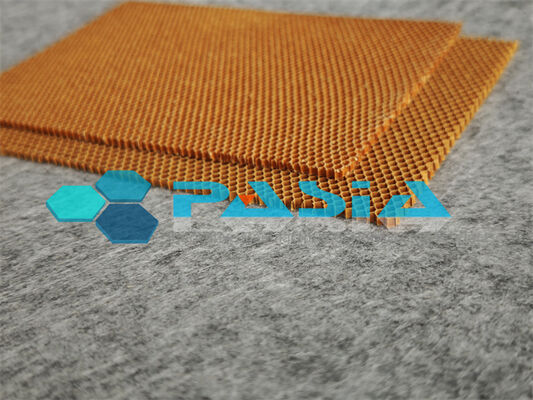
| Product Name: | Aramid Nomex Honeycomb Panel | Treatment: | Single Tow |
Aramid Honeycomb Ballistic Composite Panel — Lightweight Structural Armor for Vehicle and Blast Protection
The Aramid Honeycomb Ballistic Composite Panel is an advanced sandwich-structured armor solution engineered for vehicle platforms that demand high survivability without compromising mobility. The panel combines aramid fiber-reinforced facesheets with a lightweight aramid honeycomb core, delivering an exceptional balance of ballistic resistance, blast energy absorption, and structural stiffness at a fraction of the weight of conventional steel armor.
Unlike homogeneous armor plates, the honeycomb core introduces a hierarchical energy-dissipation mechanism: incoming projectiles and blast pressures are progressively arrested through facesheet deformation, core cell crushing, and controlled delamination, rather than through sheer mass alone. This makes the panel particularly effective against fragmenting threats, spall, and underbody blast impulses.
Key Performance Characteristics
Multi-Threat Protection. The panel provides robust protection against bullets, shrapnel, and high-velocity fragments. The layered aramid construction is engineered to meet recognized ballistic standards, with V50 performance characterized under MIL-STD-662F and NATO STANAG 2920 methodologies. For vehicle integration, configurations can be tailored toward STANAG 4569 protection levels, including underbody and mine protection applications.
Superior Specific Energy Absorption. Comparative studies confirm that aramid honeycomb sandwich structures outperform aluminum honeycomb counterparts in both absolute energy absorption and specific energy absorption (energy absorbed per unit mass). This efficiency is critical for vehicle armor, where every kilogram saved translates directly into improved payload, range, and fuel economy.
Structural-Functional Integration. The honeycomb core is not merely a weight-saving filler; it contributes to the panel's bending stiffness and compressive load-bearing capacity. Thicker facesheets and cell walls have been shown to enhance ballistic limit and energy uptake, while longer cell lengths tend to reduce these properties—parameters that can be tuned to match specific threat profiles and installation constraints.
Blast Mitigation. In underbody and floor applications, honeycomb sandwich armor has been demonstrated to reduce peak structural deformation and velocity in protected compartments compared with integral armor alone, contributing to lower blast energy transmission to occupants.
Construction and Materials
The panel is built around a phenolic-resin-coated aramid honeycomb core, selected for its high specific strength, thermal stability, and low moisture sensitivity. Facesheets are formed from multiple layers of aramid fabric—woven, unidirectional, or hybrid cross-plied architectures—bonded to the core using thermoset, thermoplastic, or rubberized resin matrices. This modular construction allows the panel to be customized for protection level, environmental durability, and integration geometry.
Aramid fiber itself combines high tensile strength and modulus with inherent flame resistance, low thermal conductivity, and excellent corrosion resistance—properties that extend service life in harsh vehicle environments.
Typical Applications
· Vehicle side and door armor: Lightweight panels providing high protection levels while reducing overall vehicle weight
· Underbody and mine protection: Composite floor structures designed to attenuate blast impulse and fragment penetration
· Hatches, covers, and wheel arch protection: Complex-geometry ballistic components tailored to installation space
· Spall liners and internal backing layers: Aramid-based panels for secondary fragment capture and trauma reduction
Mechanical Properties of the Nomex Honeycomb Core
| Size of honeycomb cell (mm)) |
Density (Kg/ m3) |
Plain compressive strength(MPa) |
Plain shear properties(Mpa) | ||||
| Pure core material | Sandwich structure | Strength | Modulus | ||||
| L | W | L | W | ||||
|
1.83 |
48 | 1.8 | 2.28 | 1.38 | 0.79 | 88 | 45 |
| 64 | 3.12 | 3.83 | 1.81 | 1.11 | 100 | 57 | |
|
2.75 |
32 | 0.92 | 1.0 | 0.79 | 0.46 | 66 | 32 |
| 48 | 2.1 | 2.33 | 1.48 | 0.86 | 121 | 54 | |
| 72 | 3.93 | 4.26 | 2.62 | 1.45 | 151 | 65 | |
Mechanical Properties of the Nomex Honeycomb Core 2
| Core type | Density ( kg/m3) |
Stab.comp.str (Mpa) |
L Shear Properties(Mpa) | W Shear Properties(Mpa) | |||||||
| Strength | Modulus | Strength | Modulus | ||||||||
| Typ | Min Ind | Typ | Min Ind | Typ | Min Ind | Typ | Min Ind | Typ | Min Ind | ||
| 3.2-29 | 29 | 0.77 | 0.60 | 0.56 | 0.47 | 25.9 | 17.4 | 0.35 | 0.30 | 14.5 | 11.3 |
| 3.2-48 | 48 | 2.35 | 1.92 | 1.22 | 1.03 | 44.5 | 34.5 | 0.73 | 0.61 | 27.1 | 20.9 |
| 3.2-64 | 64 | 3.88 | 3.22 | 1.72 | 1.55 | 61.0 | 54.0 | 0.99 | 0.82 | 34.0 | 25.0 |
| 3.2-80(E) | 80 | 6.67 | 4.49 | 1.92 | 1.65 | 66.1 | 52.3 | 1.20 | 0.97 | 43.9 | 36.3 |
| 3.2-80 | 80 | 5.19 | 4.69 | 2.22 | 1.95 | 71.0 | 64.0 | 1.23 | 1.05 | 38.4 | 34.0 |
| 3.2-96(E) | 96 | 8.99 | 8.78 | 2.49 | 2.25 | 82.8 | 77.5 | 1.73 | 1.67 | 59.1 | 55.5 |
| 4.8-40 | 40 | 1.63 | 1.46 | 0.95 | 0.92 | 38.0 | 36.3 | 0.55 | 0.52 | 23.9 | 22.5 |
| 4.8-48 | 48 | 2.45 | 1.86 | 1.24 | 1.02 | 41.3 | 34.0 | 0.77 | 0.60 | 30.0 | 18.0 |
| 4.8-72 | 72 | 5.28 | 4.60 | 1.70 | 1.32 | 57.1 | 47.5 | 1.09 | 0.80 | 40.5 | 23.2 |
| 4.8EX-48 | 48 | 2.20 | 1.80 | 0.79 | 0.62 | 20.6 | 16.1 | 0.87 | 0.72 | 42.0 | 34.0 |
Typical application:
Uses includes flooring, radomes, antennas, shelters, fuel tanks, helicopter rotor blades, basis, indoor decoration panels and navy bulkhead joiner panels.