Innovative Manufacturer of Honeycomb and MI Heating Products
Innovative Manufacturer of Honeycomb and MI Heating Products
Product Details:
Payment & Shipping Terms:
|
| Process: | Vacuum Brazed | Material: | Haynes 214 |
|---|---|---|---|
| Industry: | Turbine | Usage: | Seal |
| Method: | Brazing | Grade: | 214 |
| Advantage: | Very Low Cross Coupling | Application: | Aircraft Engine Part |
Thermal Cycling Resistance Aero-Engine Derivatives Honeycomb Seal with Good Process Traceability
The Honeycomb Seal Ring is a critical clearance-control component mounted in the annular groove around the engine inner casing, closely surrounding the rotating blade tips. Its primary function is to seal the radial clearance between the blades and the engine casing, minimizing gas path leakage, thereby improving engine efficiency and reducing fuel consumption.
Designed for the most demanding aero-engine operating conditions, this product builds upon proven honeycomb sealing technology while integrating two key differentiators: superior thermal cycling resistance and end‑to‑end process traceability. It delivers reliable gas‑path sealing throughout the entire engine life cycle.
2. Working Principle & Technical Features
2.1 Honeycomb Sealing Principle
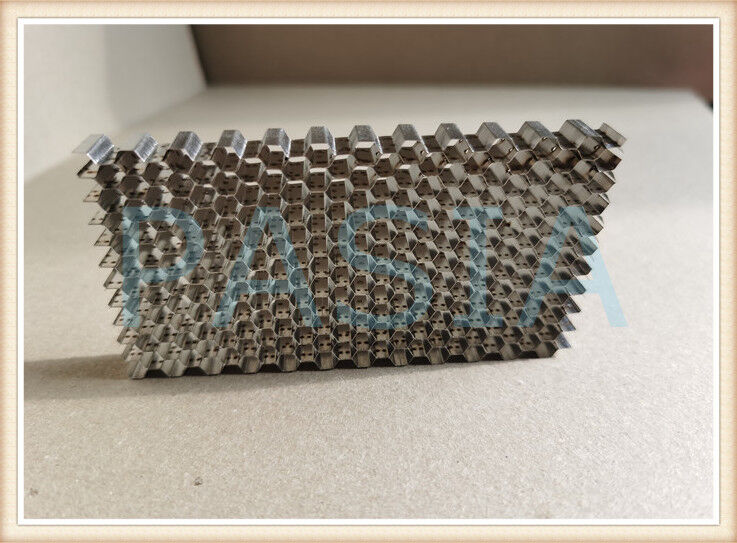
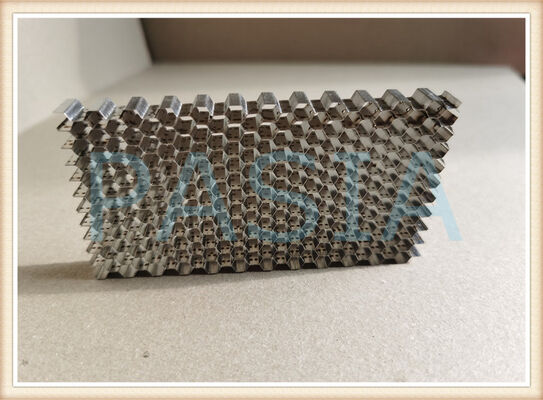
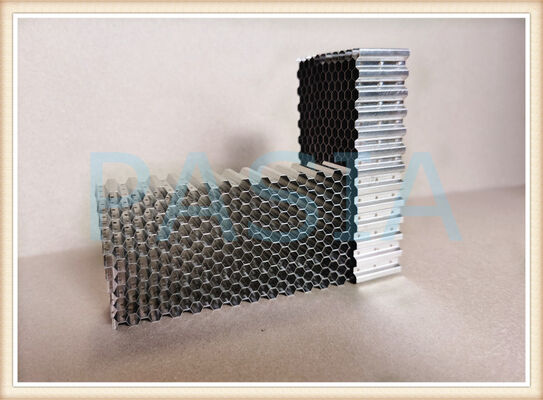
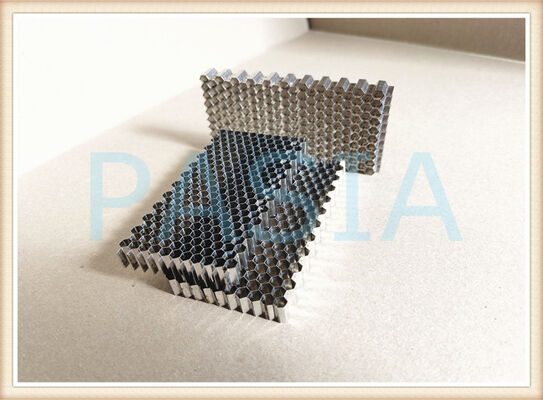
The seal ring features a regular hexagonal honeycomb cellular structure, precision‑formed from high‑temperature alloy foil (0.05 mm or 0.1 mm thick) through stamping and vacuum brazing. Cell diameters range from 0.8 mm to 3.0 mm, tailored to the blade size, with a maximum cell depth of 13 mm.
During high‑altitude flight, engine materials expand due to rising temperatures. The honeycomb seal ring provides a sacrificial abradable layer that allows blade tips to gently cut their own running clearance, preventing dangerous rubbing against the rigid casing. This “active wear” design enables the smallest possible tip clearance, drastically reducing leakage.
2.2 Key Performance Comparison
Parameter Traditional Labyrinth Seal This Honeycomb Seal
Leakage loss Baseline 50‑70% reduction
High‑temperature capability Moderate Excellent (Hastelloy X / Ni‑based superalloys)
Thermal cycling adaptability Poor, prone to distortion Outstanding, with dedicated process control
Abradability Limited Excellent, protects blade tips
Process traceability Limited Full‑chain traceable
3. Core Advantages
3.1 Superior Thermal Cycling Resistance
Aero‑engines undergo severe temperature transients during take‑off, cruise, and landing – from cold ground ambient to over 1000°C at the combustor outlet. Each flight represents a complete thermal cycle.
Common pain points with conventional honeycomb seals:
· Abradable filler material within the honeycomb cells tends to loosen or spall under repeated thermal cycling.
· Distortion induced by brazing thermal cycles has long been a manufacturing challenge.
· Rotor centrifugal and thermal deformation, along with windage heating, jeopardize engine stability and safety.
Our solutions:
· Use Hastelloy X and other proven high‑temperature alloys that maintain structural integrity under combustor‑grade heat and repeated thermal cycles.
· Proprietary vacuum brazing thermal‑cycle control that effectively prevents honeycomb distortion during the brazing process.
· Alternative material options – GH3536, GH3030, GH4214 – tailored to different engine zones.
· Products are validated under simulated engine thermal‑cycle environments to guarantee long‑term reliability.
3.2 End‑to‑End Process Traceability
In the aero‑engine industry, every single component’s quality is a matter of flight safety. Yet, with traditional honeycomb seals, manufacturing data – from foil stamping and brazing to final machining – is often scattered and difficult to trace.
Our solution – a fully traceable system from raw material to delivery:
Traceability Stage Data Captured Customer Value
Raw material Foil grade, batch, physical properties Source control prevents material defects
Honeycomb forming Stamping parameters, cell size, wall thickness Ensures geometric consistency
Vacuum brazing Temperature profile, vacuum level, soak time Thermal distortion is monitored and controlled
Precision machining EDM / short‑arc machining parameters Final dimensional accuracy guaranteed
Non‑destructive testing Fluorescent penetrant, X‑ray records Zero defects policy
Final inspection & release Roundness, flatness, PCD hole diameter Deliver “right‑first‑time” parts
Each product carries a unique traceability code, allowing customers to retrieve all manufacturing and inspection data instantly. Every part traceable, every step accountable.
4. Technical Specifications
4.1 Material System
Material Application Zone Characteristics
Hastelloy X Turbine‑stage honeycomb Excellent high‑temperature strength & oxidation resistance
GH3536 General honeycomb core Good overall high‑temp performance
GH3030 Intermediate‑temperature zones Cost‑effective
GH4214 High‑temperature zones Outstanding hot corrosion resistance
Stainless steel / superalloy Support rings Brazed compatibly with honeycomb core
4.2 Dimensional Parameters
Parameter Range
Cell diameter 0.8 mm ~ 3.0 mm
Cell depth Up to 13 mm
Foil thickness 0.05 mm / 0.1 mm
Cell geometry Regular hexagon
Equivalent Young’s modulus 0.304 GPa (for Hastelloy X honeycomb structure)
4.3 Performance Indicators
· Leakage reduction: 50‑70% compared to traditional labyrinth seals
· Operating temperature: Capable of turbine‑stage environments
· Thermal cycle life: Verified through dedicated thermal‑cycle tests, compatible with engine overhaul intervals
· Wear resistance: The honeycomb structure itself is highly wear‑resistant, providing long service life
5. Applications
5.1 Typical Installation Locations
· Compressor stator honeycomb seal segments
· Combustor front seal ring assemblies
· Turbine outer shroud honeycomb arcs
· Low‑pressure turbine rotor honeycomb assemblies
Engineered for Precision – Technical Specifications
Our honeycomb seal product line supports the following flexible specifications:
| Parameter | Specification Range |
| Material Options | Stainless Steel, Haynes 214, Hastelloy X, High-Temperature Alloy, Carbon Steel |
| Honeycomb Cell Size | 0.8 mm – 5.6 mm (0.8 mm, 1.6 mm, 2.0 mm, 3.2 mm, 4.2 mm, 5.6 mm, etc.) |
| Cell Wall Thickness | 0.08mm, 0.1mm, 0.13 mm, 0.15 mm, 0.2 mm (customizable) |
| Product Forms | Rings, Segments, Strips, Rectangular Sheets etc |
| Manufacturing Processes | Automatic Laser Welding, Vacuum Brazing etc |
Advantages
| 1 | Very low cross coupling |
| 2 | Higher direct damping that labyrinth seals |
| 3 | More forgiving than labyrinth seals in the event of a rotor-stator rub |
| 4 | Variety of materials available to serve a wide range of applications |
| 5 | Capable of sustaining higher temperatures than conventional labyrinth seals |