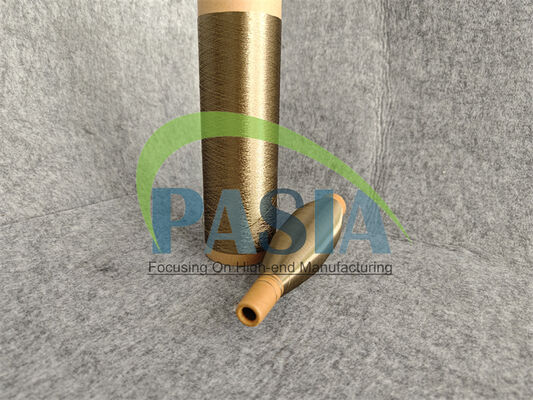
Innovative Manufacturer of Honeycomb and MI Heating Products
Innovative Manufacturer of Honeycomb and MI Heating Products
Product Details:
Payment & Shipping Terms:
|
| Material: | Basalt Stone Fiber | Diameter: | 13 Micron |
|---|---|---|---|
| Linear Density: | 2400 Tex | Sizing: | Silane |
| Application: | Weaving Or Filament Winding | Compatible With: | General Resin |
23 Micron 2400 tex Basalt Continuous Fiber Roving for Pultrusion Rebar for Concrete
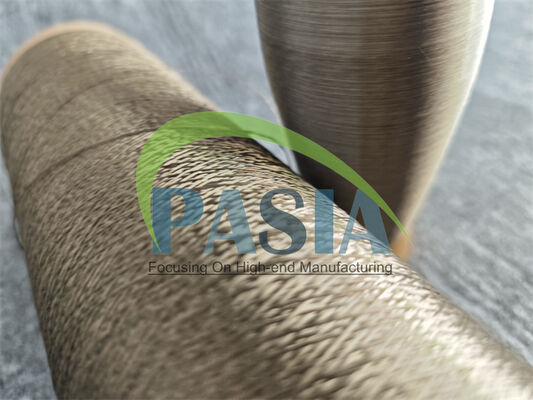
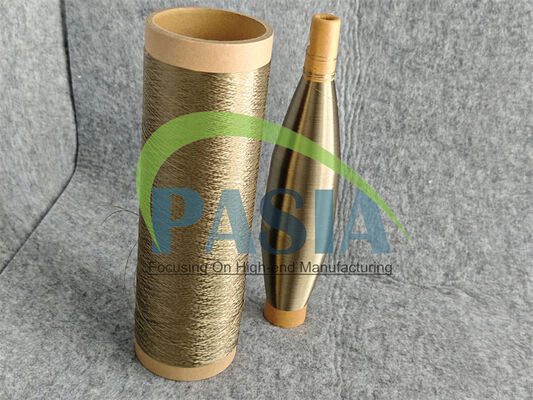
Basalt Continuous Fiber Roving is a high-performance reinforcement material engineered from volcanic basalt rock through an advanced high-temperature melting and extrusion process. This product is a direct roving — a ready-to-use continuous one-end strand produced in the drawing process, characterized by zero catenary and excellent appearance.
The 23 μm filament diameter and 2400 tex linear density specification is specifically optimized for pultrusion applications, delivering outstanding mechanical properties, chemical durability, and thermal stability for concrete reinforcement rebar production.
Key Product Identity:
| Parameter | Specification |
| Product Type | Direct Roving (Untwisted Continuous Strand) |
| Filament Diameter | 23 μm |
| Linear Density | 2400 tex |
| Sizing Type | Silane-based |
| Fiber Origin | Basalt Volcanic Rock |
| Production Method | Pool Kiln Wire-Drawing with Large Bushing |
---
2. Technical Specifications
2.1 Physical Properties
| Parameter | Value | Test Method |
| Filament Diameter | 23 μm | |
| Linear Density (Tex) | 2400 tex | |
| Density | 2.63 g/cm³ | DIN 65569 |
| Moisture Content | ≤ 0.1% | ASTM D570 |
| Sizing Content | ≥ 0.4% (minimum) | |
| Loss on Ignition | ≥ 0.40% | (varies with sizing) |
2.2 Mechanical Properties
| Parameter | Value | Test Method |
| Tensile Strength (Dry Fiber) | ≥ 0.65 N/tex | ASTM D3822 |
| Tensile Strength (Impregnated Strand) | 2,900 – 3,100 MPa | ASTM D2343 |
| Tensile Modulus | 86 – 90 GPa |
ASTM D2343
|
| Elongation at Break | ≥ 2.6% – 3.5% | ASTM D2343 |
| Tenacity (10-16 μm) | ≥ 650 mN/tex | ASTM D3822 |
2.3 Thermal Properties
Parameter Value
Continuous Service Temperature Up to 700°C – 850°C
Short-Term Exposure Up to 982°C (1,800°F)
Low-Temperature Limit Down to -260°C
Operating Range -260°C to +850°C
2.4 Electrical Properties
Parameter Value
Volume Resistivity 1×10¹² Ω·cm
Electrical Insulation Excellent
Magnetic Signature Zero (non-magnetic)
---
3. Performance Advantages
3.1 Superior Mechanical Strength
Basalt fiber roving delivers tensile strength 30% higher than E-glass fibers (up to 4,800–5,500 MPa), enabling lightweight yet load-bearing structures. The high elastic modulus (86–90 GPa) provides specific tenacity exceeding steel fibers by multiple times.
3.2 Exceptional Thermal Resilience
The product maintains structural integrity across an extreme temperature range from -260°C to +850°C without degradation. It can withstand sustained temperatures up to 982°C (1,800°F), making it ideal for fire-resistant applications and high-temperature environments.
3.3 Outstanding Chemical & Environmental Resistance
· Corrosion Immunity: Resists alkalis, acids, and salts across pH 2-14, even in marine environments
· Alkali & Acid Resistance: High resistance to aggressive chemical environments
· UV Stability: Maintains 98% strength retention after 3,000 hours of accelerated weathering (ISO 4892)
· Hydrophobic Nature: <0.1% moisture absorption prevents matrix debonding
· Nuclear & Biological Immunity: Resistant to nuclear radiation, UV light, and biological contamination
3.4 Low Catenary & Processability
The direct roving format offers zero catenary and excellent appearance. With optimized silane-based sizing, it demonstrates excellent compatibility with a wide range of resin systems including epoxy (EP), vinyl ester (VE), polyester (UP), polypropylene (PP), polyamide (PA), phenolic (PF), and acrylate systems.
3.5 Sustainability Profile
· Made from abundant volcanic rock
· Fully recyclable and non-toxic
· REACH/ROHS compliant
· No carcinogenic risks
---
4. Applications
4.1 Primary Application: Pultruded Rebar for Concrete Reinforcement
This 23 μm / 2400 tex roving is specifically engineered for the production of basalt fiber reinforced polymer (BFRP) rebar via the pultrusion process.
BFRP Rebar Advantages over Steel:
Property BFRP Rebar Steel Rebar
Weight (same diameter) 1/4 of steel Reference
Tensile Strength ~3× steel strength Reference
Corrosion Resistance Excellent Poor
Magnetic Non-magnetic Magnetic
Thermal Conductivity Low High
The pultrusion process continuously draws fiber rovings and mats through a resin bath and a heated die, producing profiles of consistent cross-section with outstanding mechanical properties.
4.2 Additional Applications
· Filament Winding: Production of high-pressure vessels, chemical storage pipes, and tanks
· Weaving: Geogrids, geotextiles, and various industrial fabrics
· Pultruded Profiles: Structural profiles for construction and infrastructure
· LFT Processes: Twin-screw direct extrusion for fiber-reinforced particles
· SMC/BMC/DMC: High-temperature resistant sheet and bulk molding compounds
---
5. Pultrusion Process Guidelines
5.1 Process Overview
The pultrusion process for BFRP rebar production involves the following stages:
1. Creel / Yarn Frame: Roving bobbins are mounted on the creel
2. Resin Impregnation: Fibers are drawn through a resin bath containing epoxy, vinyl ester, or polyester resin to achieve complete wet-out
3. Pre-forming: Excess resin is removed and fibers are shaped
4. Heated Die / Curing: The impregnated fibers pass through a heated die where curing occurs
5. Cooling System: The cured profile is cooled
6. Traction Device: Continuous pulling mechanism
7. Automatic Coiler: Finished rebar is coiled or cut to length
5.2 Recommended Resin Systems
Resin Type Compatibility
Epoxy (EP) Excellent
Vinyl Ester (VE) Excellent
Polyester (UP) Excellent
Polyamide (PA) Good
Polypropylene (PP) Good
Phenolic (PF) Good
Acrylate Good
Spcifications:
| Item No. | Linear Density(Tex) |
Tolerance (Tex) |
Sizing (%) |
Maximum Moisture (%) |
Diameter (μm) |
| PBFR7-FV-800 | 800 | ±64 | 0.4 | 0.2 | 7 |
| PBFR9-PP-1100 | 1100 | ±88 | 0.4 | 0.2 | 9 |
| PBFR9-PV-2400 | 2400 | ±192 | 0.4 | 0.2 | 9 |
| PBFR13-GC-1200 | 1200 | ±96 | 0.4 | 0.2 | 13 |
| PBFR13-GC-2400 | 2400 | ±192 | 0.4 | 0.2 | 13 |
Normally, direct roving is much better for filament winding, pultrusion and weaving fabrics.
| Property | Description |
| Type of fiber | Continuous basalt fiber |
| Monofilament diameter [µm] | From 9 to 31 |
| Linear density [tex] | 180-9600 |
| Type of sizing | Silane or starch |
| Sizing content (% wt.) | ≥0.4 |
| Resin compatibility | Polyester, vinyl ester, epoxy |
| Moisture content (% wt.) | <0.1 |
| Thermal Properties | |
| Melting Range: | 1460-1500°C |
| Crystalization temperature: | 1250°C |
| Sintering Temerature: | 1050°C |
| Thermal Conductivity, W/(m.K) | 0.031-0.038 |
| Tensile Strength Change by heating Pasia Basalt Fiber | |||
| Temperature | +20°C | +200°C | +400°C |
| Tensile Strength Change | 100% | 95% | 80% |
Application Cases:
--Continuous basalt roving of 1200tex and 2400tex are preferred to making mesh fabrics, geo grille and base cloth for high-temperature filtration needled felts, which can be reliably used at the temperature zone from -260℃ to 650℃; Which has stable handling property at super low-temperature
-- Continuous basalt fiber roving of 4800tex and 2400tex is preferred to filament winding of pipes and tanks resistant to high- temperature, super low temperature, chemical corrosion and high-pressure.
-- Hybrid use with carbon fiber to filament-wind LPG and natural gas tanks;
-- Heat shields for tank gun tubes, gun turrets, etc.
-- Used as the base bulletproof material.