Innovative Manufacturer of Honeycomb and MI Heating Products
Innovative Manufacturer of Honeycomb and MI Heating Products
Product Details:
Payment & Shipping Terms:
|
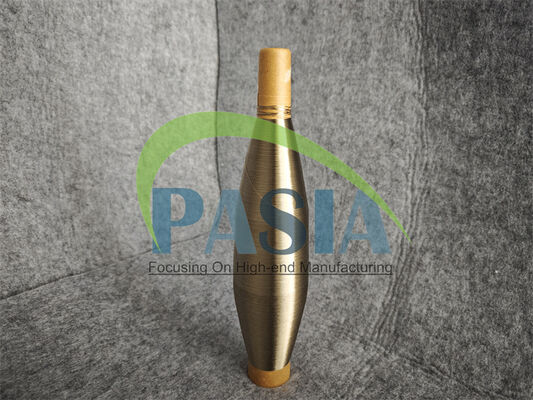
| Material: | Basalt Stone Fiber | Diameter: | 13 Micron |
|---|---|---|---|
| Linear Density: | 2400 Tex | Sizing: | Silane |
| Application: | Weaving Or Filament Winding | Compatible With: | General Resin |
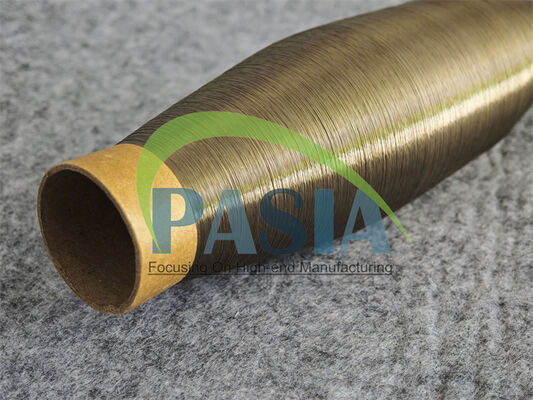
Basalt Fiber Yarn of 2400 Tex Count Featuring Exceptional Alkali and Acid Resistance Used Primarily for Concrete Reinforcement and Seismic Retrofitting Construction Projects
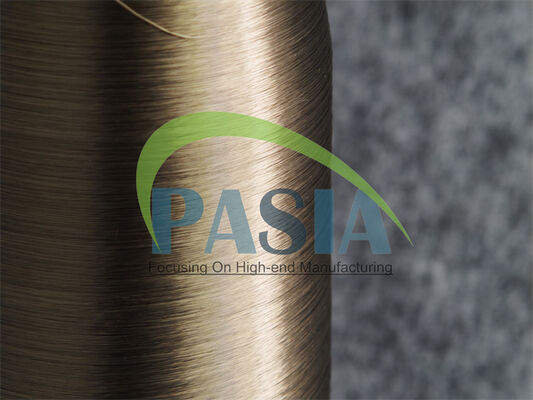
Pasia basalt fiber Continuous Basalt Fiber Yarn (2400 Tex) is a high-performance inorganic fiber yarn produced from natural volcanic basalt rock through a platinum-rhodium alloy bushing drawing process. This yarn is specifically engineered to deliver exceptional resistance to both alkaline and acidic environments, making it an ideal reinforcement material for concrete structures and seismic retrofitting construction projects.
Key Features
· Exceptional Alkali & Acid Resistance: Maintains structural integrity and mechanical strength in highly corrosive environments, including alkaline concrete pore solutions and acidic exposure conditions.
· High Tensile Strength: Offers superior tensile strength compared to traditional reinforcement materials such as steel and E-glass fiber.
· Excellent Thermal Stability: Withstands high temperatures without significant degradation (up to 650°C continuous service temperature).
· Non-Magnetic & Electrically Insulating: Suitable for specialized construction applications requiring non-conductive properties.
· Eco-Friendly & Sustainable: Produced from natural volcanic rock with no toxic additives, free from boron and other harmful substances.
· Durable & Long-Lasting: Resists UV radiation, moisture, and chemical attack, ensuring long service life in demanding environments.
Primary Applications
1. Concrete Reinforcement
· Reinforcement of concrete structural elements (beams, columns, slabs, and foundations)
· Replacement or supplement to traditional steel rebar in corrosive environments
· Fiber-reinforced concrete (FRC) for improved crack resistance and durability
· Bridge deck and pavement reinforcement
2. Seismic Retrofitting
· Strengthening of existing concrete columns and beams
· Wrapping and confinement of structural members for enhanced ductility
· Reinforcement of masonry walls and infill panels
· Retrofit of bridge piers and infrastructure in seismic zones
Spcifications:
| Item No. | Linear Density(Tex) |
Tolerance (Tex) |
Sizing (%) |
Maximum Moisture (%) |
Diameter (μm) |
| PBFR7-FV-800 | 800 | ±64 | 0.4 | 0.2 | 7 |
| PBFR9-PP-1100 | 1100 | ±88 | 0.4 | 0.2 | 9 |
| PBFR9-PV-2400 | 2400 | ±192 | 0.4 | 0.2 | 9 |
| PBFR13-GC-1200 | 1200 | ±96 | 0.4 | 0.2 | 13 |
| PBFR13-GC-2400 | 2400 | ±192 | 0.4 | 0.2 | 13 |
Normally, direct roving is much better for filament winding, pultrusion and weaving fabrics.
| Property | Description |
| Type of fiber | Continuous basalt fiber |
| Monofilament diameter [µm] | From 9 to 31 |
| Linear density [tex] | 180-9600 |
| Type of sizing | Silane or starch |
| Sizing content (% wt.) | ≥0.4 |
| Resin compatibility | Polyester, vinyl ester, epoxy |
| Moisture content (% wt.) | <0.1 |
| Thermal Properties | |
| Melting Range: | 1460-1500°C |
| Crystalization temperature: | 1250°C |
| Sintering Temerature: | 1050°C |
| Thermal Conductivity, W/(m.K) | 0.031-0.038 |
| Tensile Strength Change by heating Pasia Basalt Fiber | |||
| Temperature | +20°C | +200°C | +400°C |
| Tensile Strength Change | 100% | 95% | 80% |
Application Cases:
--Continuous basalt roving of 1200tex and 2400tex are preferred to making mesh fabrics, geo grille and base cloth for high-temperature filtration needled felts, which can be reliably used at the temperature zone from -260℃ to 650℃; Which has stable handling property at super low-temperature
-- Continuous basalt fiber roving of 4800tex and 2400tex is preferred to filament winding of pipes and tanks resistant to high- temperature, super low temperature, chemical corrosion and high-pressure.
-- Hybrid use with carbon fiber to filament-wind LPG and natural gas tanks;
-- Heat shields for tank gun tubes, gun turrets, etc.
-- Used as the base bulletproof material.