Innovative Manufacturer of Honeycomb and MI Heating Products
Innovative Manufacturer of Honeycomb and MI Heating Products
Product Details:
Payment & Shipping Terms:
|
| Material: | Nomex | Foil Thinkness: | 0.05, 0.06 Or 0.076 Mm |
|---|---|---|---|
| Cell Size: | 2, 3, 5, 8 Mm | Hardness: | H18 |
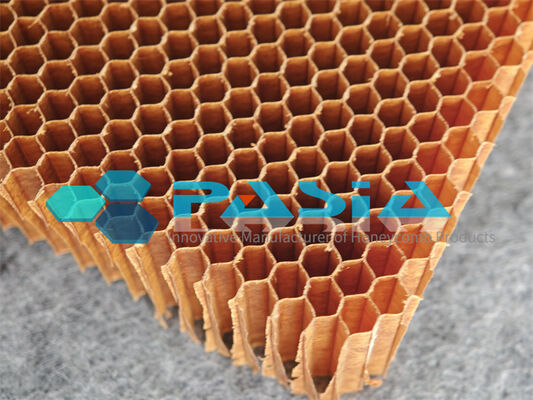
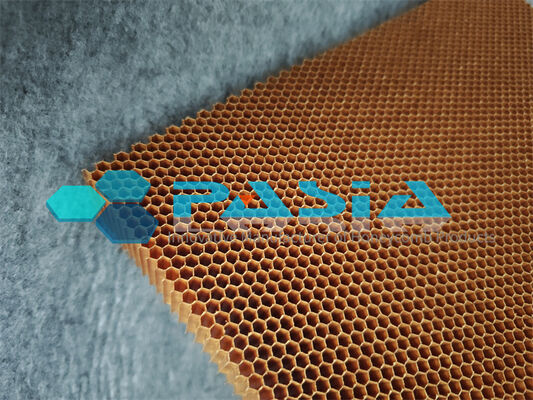
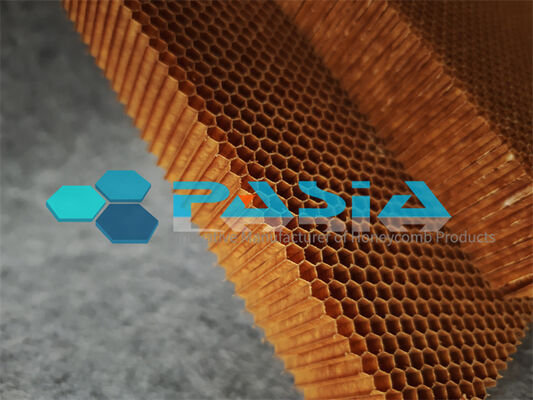
| Height: | Customized | Product Name: | Nomex Paper Honeycomb Core |
High Strength Self Extinguishing Aramid Honeycomb Core With Low Smoke Emission
1. Overview – The Triple-Threat Core Material
In modern aerospace, high-speed rail, and defense engineering, three non-negotiable demands converge: structural integrity under extreme loads, zero fire propagation risk, and human-safe smoke levels during thermal events. Most materials address one or two—rarely all three.
Our High Strength Self Extinguishing Aramid Honeycomb Core with Low Smoke Emission is engineered precisely to meet that triple mandate. It combines the load-bearing capacity of premium structural composites with active fire-interruption chemistry and passively controlled pyrolysis emissions—all within a density range that keeps weight firmly in check.
This is not a "fire-retardant treated" material; it is fire-inherent by design.
---
2. Feature #1 – High Strength (Structural Excellence)
Strength is not just about peak numbers—it's about reliable, reproducible performance under shear, compression, and fatigue.
· Flatwise compressive strength: up to 14.5 MPa (depending on density), enabling heavy floor loads in wide-body aircraft and high-speed train decks.
· Shear strength (longitudinal): up to 7.2 MPa, with shear modulus reaching 450 MPa—ensuring torsional rigidity in control surfaces, wing trailing edges, and missile fins.
· Specific stiffness: approximately 9 times that of steel per unit weight, meaning you achieve metal-like rigidity at a fraction of the mass.
· Fatigue resistance: tested over 10⁶ cycles without significant modulus degradation—critical for rotorcraft bulkheads and dynamically loaded marine panels.
Unlike foam cores that crush progressively or aluminum cores that yield permanently, our aramid honeycomb maintains its cell-wall integrity under cyclic loading, delivering predictable, repeatable strength over the full service life.
---
3. Feature #2 – Self Extinguishing (Active Fire Interruption)
When exposed to an open flame, many composites continue to burn, feeding the fire and accelerating structural collapse. Our core behaves differently.
· Self-extinguishing mechanism: The phenolic resin matrix, combined with aramid fiber's intrinsic thermal stability, triggers a char-forming reaction upon heating. This char layer acts as a physical barrier, cutting off oxygen supply and quenching the flame within ≤ 2 seconds after ignition source removal.
· No molten drip: Unlike thermoplastics or aluminum (which melts and spreads fire), our core maintains its geometric shape during thermal exposure, preventing secondary fire propagation.
· Tested compliance: Passes UL 94 V-0 (vertical burn) and FAR 25.853 (b) with zero after-flame time in vertical and horizontal configurations.
This active self-extinguishing property gives cabin crews and ground personnel critical evacuation time—often the difference between a contained incident and a catastrophic event.
---
4. Feature #3 – Low Smoke Emission (Passenger & Personnel Safety)
High strength and self-extinguishing are useless if the material generates dense, toxic smoke that incapacitates before the fire reaches anyone. Smoke—not heat—is the primary killer in enclosed-space fires.
Our core addresses this through two deliberate design choices:
· Phenolic resin chemistry: Engineered to decompose via a low-smoke, low-toxicity pathway. Volatile organic compounds (VOCs) are minimized, and the main off-gases are water vapor and carbon monoxide at levels far below regulatory limits.
· Aramid fiber composition: Free from halogens (chlorine, bromine) and heavy metal synergists—commonly found in inferior fire-retardant additives that produce dense black smoke and corrosive gases.
Measured performance (NBS Smoke Density Chamber – flaming mode):
· Maximum specific optical density (Dₘ) < 150 (vs. < 200 required by most aerospace standards)
· Time to 90% of Dₘ ≥ 4 minutes—allowing smoke evacuation systems to activate before visibility drops to critical levels.
· Toxicity index (per Airbus ABD0031 / Boeing D6-51332) well below thresholds for hydrogen cyanide, hydrogen chloride, and sulfur dioxide.
Bottom line: In a fire event, this core gives occupants clearer air, longer visibility, and a genuine survival margin.
---
Mechanical Properties of the Nomex Honeycomb Core
| Size of honeycomb cell (mm)) |
Density (Kg/ m3) |
Plain compressive strength(MPa) | Plain shear properties(Mpa) | ||||
| Pure core material | Sandwich structure | Strength | Modulus | ||||
| L | W | L | W | ||||
|
1.83 |
48 | 1.8 | 2.28 | 1.38 | 0.79 | 88 | 45 |
| 64 | 3.12 | 3.83 | 1.81 | 1.11 | 100 | 57 | |
|
2.75 |
32 | 0.92 | 1.0 | 0.79 | 0.46 | 66 | 32 |
| 48 | 2.1 | 2.33 | 1.48 | 0.86 | 121 | 54 | |
| 72 | 3.93 | 4.26 | 2.62 | 1.45 | 151 | 65 | |
Mechanical Properties of the Nomex Honeycomb Core 2
| Core type | Density ( kg/m3) |
Stab.comp.str (Mpa) |
L Shear Properties(Mpa) | W Shear Properties(Mpa) | |||||||
| Strength | Modulus | Strength | Modulus | ||||||||
| Typ | Min Ind | Typ | Min Ind | Typ | Min Ind | Typ | Min Ind | Typ | Min Ind | ||
| 3.2-29 | 29 | 0.77 | 0.60 | 0.56 | 0.47 | 25.9 | 17.4 | 0.35 | 0.30 | 14.5 | 11.3 |
| 3.2-48 | 48 | 2.35 | 1.92 | 1.22 | 1.03 | 44.5 | 34.5 | 0.73 | 0.61 | 27.1 | 20.9 |
| 3.2-64 | 64 | 3.88 | 3.22 | 1.72 | 1.55 | 61.0 | 54.0 | 0.99 | 0.82 | 34.0 | 25.0 |
| 3.2-80(E) | 80 | 6.67 | 4.49 | 1.92 | 1.65 | 66.1 | 52.3 | 1.20 | 0.97 | 43.9 | 36.3 |
| 3.2-80 | 80 | 5.19 | 4.69 | 2.22 | 1.95 | 71.0 | 64.0 | 1.23 | 1.05 | 38.4 | 34.0 |
| 3.2-96(E) | 96 | 8.99 | 8.78 | 2.49 | 2.25 | 82.8 | 77.5 | 1.73 | 1.67 | 59.1 | 55.5 |
| 4.8-40 | 40 | 1.63 | 1.46 | 0.95 | 0.92 | 38.0 | 36.3 | 0.55 | 0.52 | 23.9 | 22.5 |
| 4.8-48 | 48 | 2.45 | 1.86 | 1.24 | 1.02 | 41.3 | 34.0 | 0.77 | 0.60 | 30.0 | 18.0 |
| 4.8-72 | 72 | 5.28 | 4.60 | 1.70 | 1.32 | 57.1 | 47.5 | 1.09 | 0.80 | 40.5 | 23.2 |
| 4.8EX-48 | 48 | 2.20 | 1.80 | 0.79 | 0.62 | 20.6 | 16.1 | 0.87 | 0.72 | 42.0 | 34.0 |
Applications
Aerospace & Aviation: Aircraft flooring, galleys, partitions, cargo liners, leading/trailing edges, control surfaces, radomes, antennas, missile wings, helicopter rotor blades, fuel tanks
Military & Defense: Military shelters, ground vehicles, naval bulkhead joiner panels
Rail Transportation: High-speed train interior panels, flooring, partitions
Marine: Boat hulls, ship panels, racing boats, yachts
Automotive & Motorsports: Racing car bodies, impact structures
Sports & Recreation: Skis, snowboards, rowing boats, racing equipment