Innovative Manufacturer of Honeycomb and MI Heating Products
Innovative Manufacturer of Honeycomb and MI Heating Products
Product Details:
Payment & Shipping Terms:
|
| Material: | Stainless Steel | Bonding: | Spot Welding Or Laser |
|---|---|---|---|
| Material Thickness: | 0.08-0.2 Mm | Cell Side Length: | 0.8-25 Mm |
| Height: | 3-250 Mm | Applications: | Water Tunnel Use |
| Grade: | SS316L | Function: | Flow Straightener |
High Temperature Tolerance Low Pressure Drop EMI Shielding Stainless Steel Honeycomb Air Flow Straightener for Engine Intake Testing
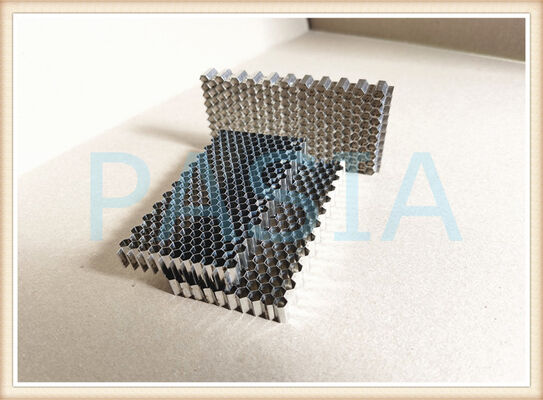
The High Temperature Tolerance Low Pressure Drop EMI Shielding Stainless Steel Honeycomb Air Flow Straightener is a precision-engineered critical component designed specifically for engine intake testing and advanced airflow management systems. Manufactured from high-quality stainless steel by Pasia Honeycomb Products Co., Ltd., this innovative device transforms turbulent airflow into uniform laminar flow, enabling accurate measurement and analysis in demanding engine test bench environments.
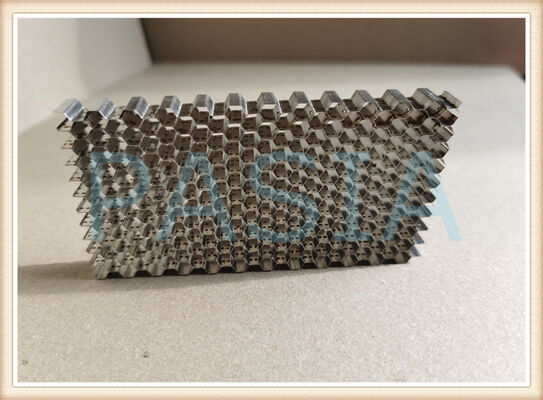
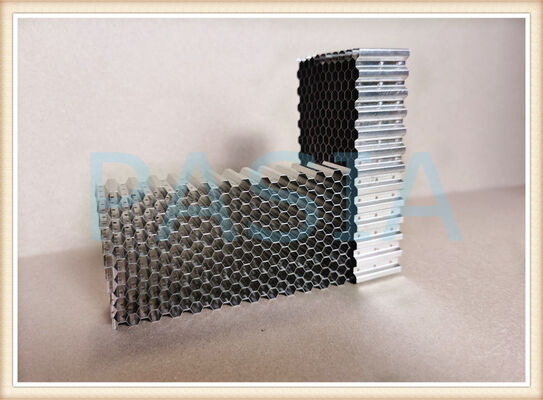
The product features a structured honeycomb matrix of thin-walled hexagonal cells that create a series of straight passageways. This design effectively breaks up large turbulent eddies, eliminates cross-flow velocities, and suppresses swirl effects, delivering research-grade flow quality essential for reliable engine intake performance data.
Key Features
1. High Temperature Tolerance
Constructed from premium stainless steel grades including 304 and 316L, the straightener offers exceptional heat resistance. 304 stainless steel withstands continuous operation up to approximately 500°C, while 316L extends that limit to roughly 600°C. This makes the product ideal for engine intake testing environments where exhaust gas recirculation, turbocharger outlet temperatures, and combustion-related heat loads push conventional materials beyond their limits. High-temperature vacuum brazing technology ensures structural integrity even under extreme thermal conditions.
2. Low Pressure Drop
With a maximum open area of 95–99%, the honeycomb structure minimizes resistance to airflow, allowing air to pass through with minimal obstruction. This low pressure drop is essential in engine intake testing, where maintaining flow rates and preserving energy efficiency are critical for accurate sensor readings and reliable test results. The typical pressure drop ranges from approximately 80–180 Pa at 10 m/s, varying by length-to-diameter ratio and cell size.
3. EMI Shielding
The stainless steel construction provides superior electromagnetic interference (EMI) shielding, protecting sensitive testing equipment from external noise and electromagnetic disturbances. In engine intake testing environments—where electronic sensors, data acquisition systems, and communication equipment operate in close proximity to ignition systems and high-voltage components—this shielding capability ensures signal integrity and measurement accuracy.
4. Corrosion Resistance
Available in 304 and 316L stainless steel grades, the product resists rust, oxidation, and degradation in harsh environments, including exposure to moisture, chemicals, and combustion byproducts commonly encountered in engine test facilities.
5. Customizable Design
Available in a wide range of specifications, including foil thicknesses from 0.05mm to 0.2mm and core sizes from 0.8mm to 30mm. Custom dimensions, shapes, and surface treatments (painting, electroless nickel plating, powder coating) can be tailored to meet specific engine intake testing requirements.
6. Sound Insulation
The honeycomb structure dampens noise generated by high-velocity airflow, making it ideal for engine test cell environments where acoustic control is important.
Applications
This stainless steel honeycomb air flow straightener is indispensable in engine intake testing and related applications:
· Automotive Engine Test Benches: Intake airflow stabilization for MAF sensor calibration, throttle response testing, and engine performance mapping.
· Aerospace Propulsion Testing: Turbine engine and jet intake flow conditioning for performance evaluation and development testing.
· Hydrogen and Natural Gas Test Benches: High-temperature tolerance makes it suitable for alternative fuel engine testing where combustion temperatures are elevated.
· Turbocharger and Supercharger Development: Intake airflow management for forced induction system testing and optimization.
· Motorsport and High-Performance Engine Development: Precision airflow control for racing engine calibration and dynamometer testing.
· Industrial Ventilation & EMI Shielding: Airflow management in sensitive electronic environments, gas seals, communications equipment, and medical devices.
Specifications
| Cell Size (mm) | 25.0 | 16.0 | 12.7 | 10.0 | 6.4 | 5.6 | 4.8 | 3.2 | 1.6 | 0.8 |
| Height Range (mm) | 50-450 | 50-450 | 50-150 | 50-150 | 5-100 | 5-90 | 5-60 | 5-60 | 3-30 | 3-25 |
| Foil Thickness (mm) | 0.20 | 0.20 | 0.20 | 0.20 | 0.20 | 0.20 | 0.20 | 0.20 | 0.076 | 0.05 |
| Cubic Density (kg/m3) | 165 | 256 | 320 | 403 | 616 | 699 | 806 | 1164 | 909 | 1164 |
| Materials | SS304, SS316 or SS316L | |||||||||
| Welding | Spot Welding with one area five spots or laser welding | |||||||||
| Shapes | Customized shape available not limited to ring, plate, loop etc | |||||||||