Innovative Manufacturer of Honeycomb and MI Heating Products
Innovative Manufacturer of Honeycomb and MI Heating Products
Product Details:
Payment & Shipping Terms:
|
| Process: | Welded | Material: | Stainless Steel |
|---|---|---|---|
| Industry: | Turbine | Usage: | Seal |
| Method: | Spot Welding | Grade: | SS304,SS316L |
| Advantage: | Very Low Cross Coupling | Application: | Aircraft Engine Part |
GH3536 Honeycomb Seal Segment for Compressor Stator Application
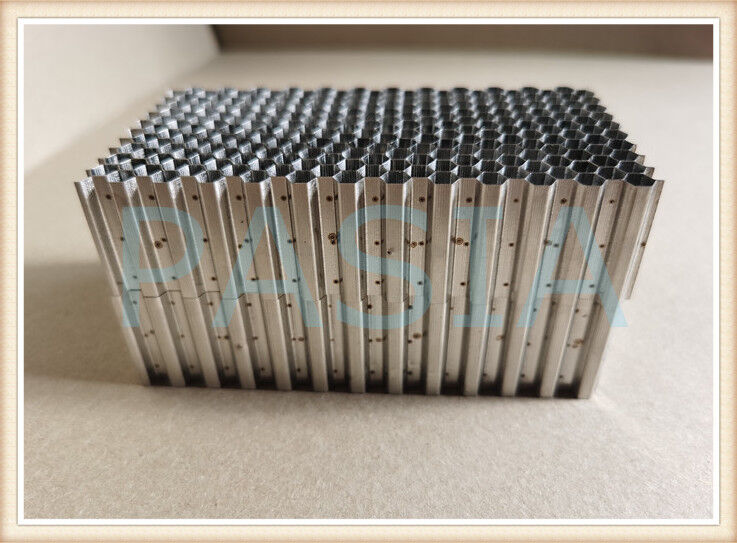
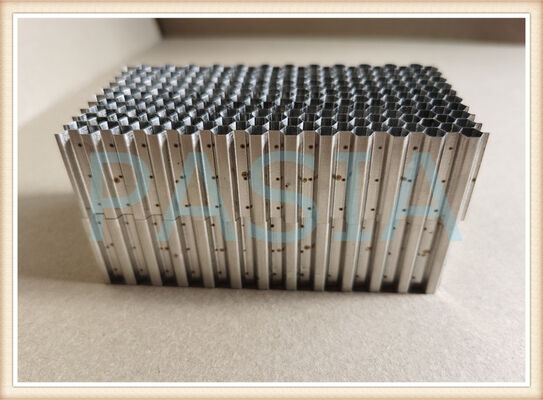
The GH3536 Honeycomb Seal Segment is a precision-engineered gas-path sealing component specifically designed for compressor stator applications in aero-engines and gas turbines. Manufactured from GH3536 nickel-based superalloy foil — the Chinese equivalent of Hastelloy X (UNS N06002) — this honeycomb seal segment is vacuum-brazed to a support ring or backing segment, forming a complete sealing assembly that effectively reduces inter-stage leakage, improves engine efficiency, and lowers fuel consumption.
GH3536 (formerly designated GH536) is a solid-solution strengthened nickel-chromium-iron-molybdenum superalloy with excellent oxidation resistance, corrosion resistance, and good formability and weldability. It is one of the most widely used superalloys in aero-engine manufacturing and has been proven in service for over half a century.
2. Material Advantages — GH3536 Superalloy
2.1 Composition & Strengthening Mechanism
GH3536 is a Ni-Cr-Fe based solid-solution strengthened wrought superalloy, with chromium and molybdenum as the primary strengthening elements. The alloy contains a relatively high iron content (17.0–20.0%), which effectively reduces raw material costs while maintaining excellent high-temperature performance.
Element Content (wt.%) Function
Nickel (Ni) Balance (≈47.5–53%) Matrix element, provides stable austenitic structure
Chromium (Cr) 20.5–23.0% Core element for high-temperature oxidation & corrosion resistance
Molybdenum (Mo) 8.0–10.0% Key solid-solution strengthening element
Iron (Fe) 17.0–20.0% Cost reduction, process compatibility
Cobalt (Co) 0.5–2.5% Auxiliary strengthening, improves creep resistance
Tungsten (W) 0.2–1.0% Auxiliary strengthening
2.2 Key Material Properties
· Operating Temperature: Long-term service below 900°C; short-term exposure up to 1080°C
· Oxidation & Corrosion Resistance: Exceptional resistance to oxidation and corrosive media (including sulfur-containing gases and halides)
· Formability & Weldability: Excellent cold and hot working formability and welding performance
· Creep & Rupture Strength: Moderate creep and rupture strength below 900°C
· Microstructure: Austenitic matrix with fine, uniformly distributed TiN and M₆C carbides
· Density: 8.28–8.3 g/cm³
· Melting Range: 1295–1381°C
3. Product Design & Features
3.1 Honeycomb Structure
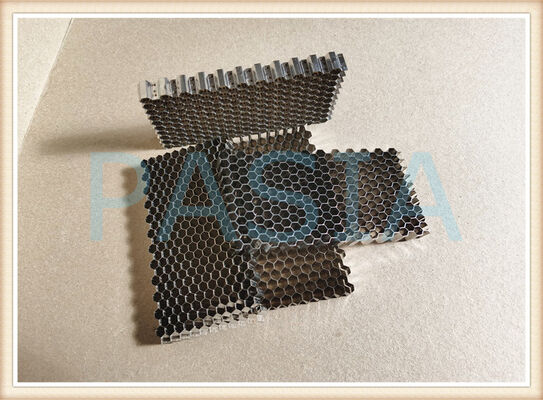
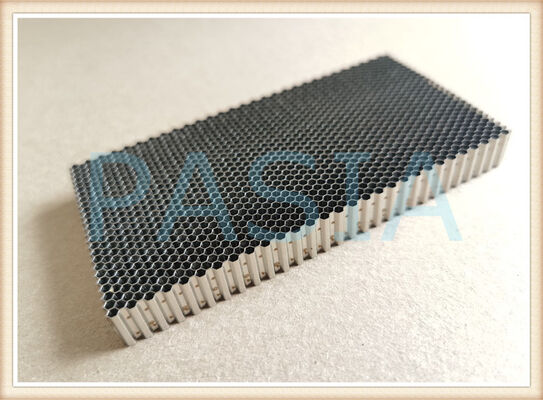
The seal segment features a regular hexagonal honeycomb cellular structure precision-formed from GH3536 superalloy foil. Typical specifications include:
Parameter Specification
Cell diameter (inscribed circle) 0.8 mm (customizable up to 3.0 mm)
Foil wall thickness 0.05 mm (or 0.1 mm)
Cell geometry Regular hexagon
Backing segment material Stainless steel or superalloy (GH4169, GH907, GH600, etc.)
3.2 Brazing Process
The honeycomb core is joined to the support ring or backing segment through precision vacuum brazing using nickel-based brazing alloys such as BNi-2.
Critical Process Achievements:
· Bonding rate: ≥ 99.5%
· Interface quality: Fine grains, uniform microstructure, no braze seam corrosion
· Mechanical strength: Plane tensile strength reaches 50 MPa; excellent strength and toughness
· Joint strength (800°C): Tensile strength ≥315 MPa, Shear strength ≥140 MPa
3.3 Sealing Principle
During compressor operation, the rotating blade tips gently cut into the honeycomb structure under centrifugal force, forming an optimal radial clearance. This "active wear" design allows the honeycomb core to function as a sacrificial abradable layer, protecting blades while minimizing gas-path leakage. Honeycomb seals can reduce leakage by 50–70% compared to traditional labyrinth seals.
4. Technical Specifications
4.1 Material System
Component Material Characteristics
Honeycomb core GH3536 (Hastelloy X) Oxidation resistance, formability, 900°C capability
Support ring / backing GH4169, GH907, GH600, or stainless steel Matched to service conditions
Brazing filler BNi-2, BNi-4, BNi-5 Nickel-based, vacuum brazing compatible
4.2 Performance Indicators
Parameter Value
Maximum service temperature 900°C (long-term); 1080°C (short-term)
Leakage reduction 50–70% vs. traditional labyrinth seals
Honeycomb bonding rate ≥ 99.5%
Plane tensile strength ≥ 50 MPa
Service life Compatible with engine overhaul intervals
5. Compressor Stator Application
5.1 Typical Installation
The GH3536 honeycomb seal segment is installed in compressor stator assemblies, where it forms a critical sealing interface between stationary vanes and rotating blade tips. It is particularly suited for:
· High-Pressure Compressor (HPC) stator vane assemblies
· Compressor discharge sealing zones
· Inter-stage sealing between compressor rotor and stator
5.2 Why GH3536 for Compressor Stators
· Thermal compatibility: The compressor section experiences significant temperature gradients — GH3536 maintains structural integrity throughout the operating range
· Oxidation resistance: Protects against oxidation from high-velocity, high-temperature airflow
· Abradability: The 0.05mm thin-wall honeycomb structure provides optimal blade tip clearance control
· Proven reliability: GH3536 is a mature alloy with extensive service history in aero-engine hot-end components
Engineered for Precision – Technical Specifications
Our honeycomb seal product line supports the following flexible specifications:
| Parameter | Specification Range |
| Material Options | Stainless Steel, Haynes 214, Hastelloy X, High-Temperature Alloy, Carbon Steel |
| Honeycomb Cell Size | 0.8 mm – 5.6 mm (0.8 mm, 1.6 mm, 2.0 mm, 3.2 mm, 4.2 mm, 5.6 mm, etc.) |
| Cell Wall Thickness | 0.08mm, 0.1mm, 0.13 mm, 0.15 mm, 0.2 mm (customizable) |
| Product Forms | Rings, Segments, Strips, Rectangular Sheets etc |
| Manufacturing Processes | Automatic Laser Welding, Vacuum Brazing etc |
Advantages
| 1 | Very low cross coupling |
| 2 | Higher direct damping that labyrinth seals |
| 3 | More forgiving than labyrinth seals in the event of a rotor-stator rub |
| 4 | Variety of materials available to serve a wide range of applications |
| 5 | Capable of sustaining higher temperatures than conventional labyrinth seals |