Innovative Manufacturer of Honeycomb and MI Heating Products
Innovative Manufacturer of Honeycomb and MI Heating Products
Product Details:
Payment & Shipping Terms:
|
| Property: | Light Weight | Size In Mm*mm: | 1200*1200 |
|---|---|---|---|
| Surface Treated: | Passivated | Application: | Car Safety |
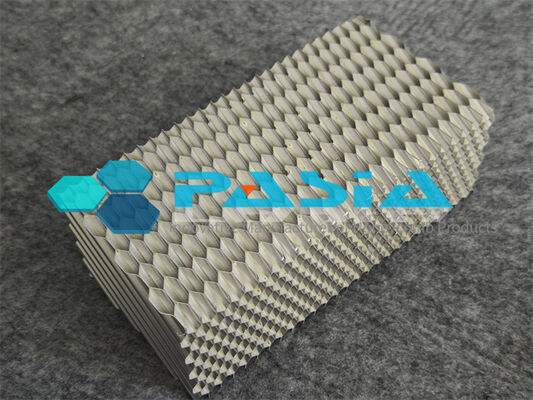
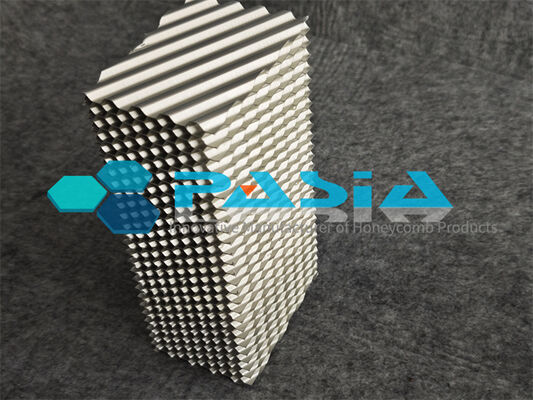
| Product Name: | Honeycomb Energy Absorber | Thickness: | Regular Thickness 20, 25 Mm Or Customized |
Superior Strength-to- Weight Ratio Minimal Rebound and Long Crush Stroke Energy-Absorbing Aluminum Honeycomb Core
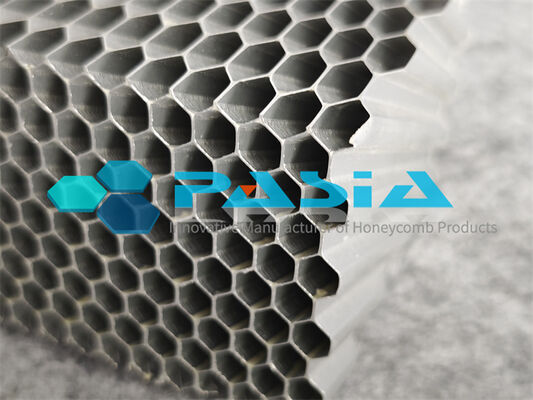
Our aluminum honeycomb core is purpose‑built for passive safety systems and impact‑energy management, where every gram and every millimeter of crush stroke counts. By combining aerospace‑grade alloy foils with a precision‑bonded hexagonal cell architecture, we deliver a structural core that outperforms conventional foams and polymer buffers in three critical dimensions:
1. Superior Strength‑to‑Weight Ratio
The hexagonal geometry converts thin‑wall aluminum into an exceptionally stiff, load‑bearing matrix. At equal mass, this core sustains 2–3× higher plateau stresses than polymeric alternatives; at equal strength, it reduces component weight by up to 40 %. This translates into lighter assemblies, lower mounting loads, and greater design freedom – especially valuable in automotive, aerospace, and railway crash‑management systems.
2. Minimal Rebound
Unlike elastomeric or gas‑filled absorbers, our aluminum honeycomb deforms through controlled, progressive plastic folding of the cell walls. Energy is dissipated as permanent plastic work, not stored elastically. Rebound force is consistently below 5 % of the peak crush force – practically zero kick‑back. This eliminates secondary impact hazards and simplifies restraint‑system tuning, because the core absorbs energy once and stays crushed.
3. Long Crush Stroke
With a usable stroke ratio (crush displacement / original height) exceeding 75 %, this core provides an exceptionally long deceleration distance. The plateau force remains stable over most of the stroke, enabling a nearly ideal “square‑wave” force‑time profile. Longer stroke means lower peak decelerations for a given impact velocity – a direct benefit for occupant protection and sensitive equipment survival.
4. Energy‑Absorbing Efficiency
The combination of high plateau stress, long stroke, and minimal rebound yields a volumetric energy absorption (E<sub>v</sub>) typically 8–15 MJ/m³, with a crush efficiency (ratio of average to peak force) above 0.85. Each cell acts as an independent energy‑dissipation unit, ensuring predictable, rate‑insensitive performance from quasi‑static to high‑speed impacts (up to 20 m/s).
---
Typical Applications
· Automotive bumper beams, crash boxes, and side‑impact beams
· Aircraft subfloor structures and helicopter crew‑seat stroking devices
· Railway anti‑climbers and coupler crash elements
· Motorsport impact attenuators and run‑off barriers
· Industrial machinery and drop‑test protection pallets
---
Why Choose This Core?
It is not just a crushable filler – it is a designable energy absorber. Cell size, foil gauge, and core density are tailored to your specific force‑stroke window. We provide full FEA material cards (LS‑DYNA, PAM‑CRASH, Abaqus) and prototype crush testing to validate performance before production.
For engineers who demand lightweight, predictable, and non‑rebounding energy management over a long crush distance, this aluminum honeycomb core is the benchmark solution. Contact our technical team to discuss your impact‑energy requirements – we deliver safety, stroke by stroke.
Key Specifications and Technical Parameters
The performance of an energy‑absorbing aluminum honeycomb core is mainly determined by three geometric parameters: foil thickness, cell side length, and core height. Among these, the ratio θ = t/b (foil thickness to cell side length) is the core indicator – the larger the θ, the better the energy absorption performance.
Common Materials and Specifications
| Parameter Category | Specification Range | Typical Values |
| Alloy grade | AA3003, AA5052, AA5056 | 3003 H18 / 5052 H24 |
| Foil thickness | 0.015–0.15 mm | 0.04–0.06 mm |
| Cell side length | 0.4–10 mm | 1.0–5.0 mm |
| Core height | 2–300 mm | 10–200 mm |
| Density range | 30–300 kg/m³ | 30–80 kg/m³ (energy‑absorbing type) |
| Compressive plateau stress | 1–30 MPa (density dependent) |
3–15 MPa
|
| Volumetric specific energy absorption(SEA_v) | 3.32–5.03 MJ/m³ |
4.0 MJ/m³
|
Pasia Honeycomb Energy Absorbers is normally supplied at a status of machine finished to required part after pre-crush from which the first few millimeters of the core should have already been crushed and in so doing attenuating the initial force peak. The initial force peak is high but for a short duration, after which the force required to displace the honeycomb quickly reduces and stays at a constant level throughout the event. Energy Absorbers can be developed for bespoke project specifications, or for serial production for a wide range of applications including:
Typical Application Scenarios
Application Field Specific Use Core Advantage
Rail transportation High‑speed train / metro front anti‑climbers, energy absorber blocks Stable force output, high specific energy absorption, controllable deformation mode
Automotive safety Frontal crash barriers, truck‑mounted attenuators (TMA) Lightweight, controllable barrier stiffness
Aerospace Aircraft floor panels, cargo liners, landing gear cushions High strength‑to‑weight ratio, high energy absorption efficiency
Marine / naval Ship hulls, naval bulkhead protection Good impact resistance, controllable deformation mode
blast protection Blast containment vessels, blast‑proof sandwich structures Good deformability, excellent cushioning and energy absorption
Testing Data
| Serial | Sample Name | Width(mm) | Length(mm) | Maximum Loading(N) | Crushing Strength(MPa) |
| Aluminum Honeycomb Core | 49.0 | 48.0 | 27487.99 | 9.70 | |
| Aluminum Honeycomb Core | 50.0 | 48.0 | 31790.69 | 9.57 | |
| Aluminum Honeycomb Core | 48.0 | 48.0 | 24778.45 | 9.59 | |
| Aluminum Honeycomb Core | 48.0 | 50.0 | 30205.60 | 9.52 | |
| Max Value | 50.0 | 50.0 | 31790.69 | 9.70 | |
| Min Value | 48.0 | 48.0 | 24778.45 | 9.52 | |
| X-bar | 48.8 | 48.5 | 28565.68 | 9.60 |
Testing Curve: