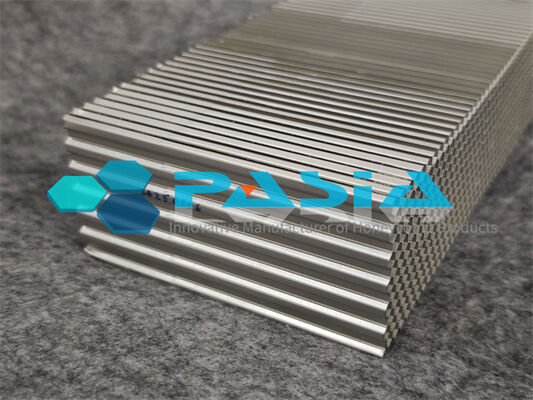
Innovative Manufacturer of Honeycomb and MI Heating Products
Innovative Manufacturer of Honeycomb and MI Heating Products
Product Details:
Payment & Shipping Terms:
|
| Foil Thickness: | 0.05mm | Size In Mm*mm: | 900*1500 |
|---|---|---|---|
| Surface Treated: | Anodized | Application: | Nuclear Power Plant |
| Product Name: | Energy Absorber | Thickness: | 25 Mm Or Customized |
Precision Instrument Transport Honeycomb Shock Absorber with Progressive Buckling Energy Absorption Mechanism
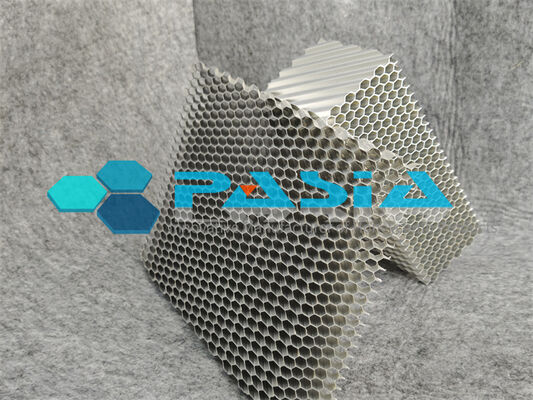
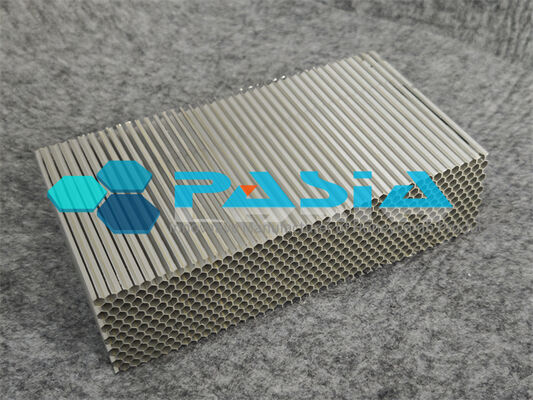
Pasia Industries, a professional advanced honeycomb core innovator and manufacturer, delivers versatile honeycomb-based products to the global market with more than 20 years of experience. The energy absorption honeycomb core can be produced based on conventional process with glue bonding or innovative process with machinery production with limited usage of special glue to obtain special performance such as high temperature resistance, chemical resistance etc. With sufficient technical know-how and experience, a wide range of standard and custom honeycomb energy absorbers for various applications are successfully delivered to clients with different cell sizes, core densities, crush strengths shapes and sizes. Aluminum honeycomb is the perfect material for energy absorption applications due to its high strength-to-weight ratio. It also has excellent moisture and corrosion resistance.
The Precision Instrument Transport Honeycomb Shock Absorber is a high-performance passive protection module designed for the safe transport of precision instruments, optical equipment, semiconductor tools, metrology systems, aerospace components, medical devices, and other shock-sensitive payloads. It combines a lightweight honeycomb core with a progressive buckling energy absorption mechanism to control impact deceleration and minimize peak shock loads during road, rail, air, and sea transportation.
Unlike conventional foam or rubber cushions that store and release energy, this absorber converts impact kinetic energy into controlled plastic deformation. The honeycomb structure buckles in a predictable, row-by-row sequence, producing a stable force plateau and preventing destructive shock spikes. This protects instrument alignment, calibration accuracy, optical performance, and structural integrity.
Working Principle
1. Trigger Stage — A designed trigger zone initiates buckling at a predetermined load, avoiding a sudden high initial force peak.
2. Progressive Buckling — Honeycomb cells collapse sequentially from the impact end, creating a controlled, stable energy-absorbing plateau.
3. Energy Dissipation — Impact energy is dissipated through plastic folding, cell wall deformation, and friction, rather than being stored and rebounded.
4. Densification & Stroke Limit — A final densification layer or stopper limits compression travel and provides additional energy absorption at the end of the stroke.
5. Multi-Stage Option — Graded density, foil thickness, or multi-layer honeycomb can be used to match different impact energy levels and achieve a smoother deceleration curve.
Key Features
· Progressive buckling energy absorption mechanism
· Low peak acceleration and controlled deceleration
· High energy absorption per unit weight
· Stable and predictable force-displacement curve
· Lightweight honeycomb construction
· Directional and axis-specific impact protection
· Customizable trigger force, plateau stress, and stroke
· Corrosion-resistant materials available
· Replaceable sacrificial absorber cartridge design
· Easy integration into transport cases, pallets, containers, and mounting frames
Typical Applications
· Precision instrument and optical equipment transport
· Semiconductor and electronics shipping
· Aerospace and defense payload protection
· Medical and laboratory equipment transport
· Metrology and calibration instruments
· Military and ruggedized transport cases
· Vibration-sensitive cargo and container cushioning
Customization Options
· Honeycomb material: aluminum, stainless steel, Nomex, polymer, or composite
· Cell size, foil thickness, and density
· Trigger notch geometry and initiation load
· Single-stage or multi-stage progressive buckling
· Mounting plates, flanges, and interface design
· Surface treatment: anodizing, painting, anti-corrosion coating
· Operating temperature range and environmental sealing
Specifications
Pasia Honeycomb Energy Absorbers can be supplied based on the cell size, foil thickness and layer, aluminum grade, width and length etc. The shape and parts can be also customized as per the request from client. The crush strength can be achieved on the performance of the foil thickness and special structure.
| Density Range (pound per cubic foot) | Cell size range (diameter inch) | Alloy | Foil thickness (mm) | Foil layers |
| 1-10 | 1/8, 1/4, 3/8, 3/4, 3/16 etc | 3003/5052 | 0.04, 0.05, 0.06, 0.08, 0.1 | Single, double or triple |
| Sample Lot | Specification | D1.5-(0.05+0.05)-3003 | |
| Client | Standard | ||
| Required Value | Conclusion | Plain Crushing Strength: 9.6MPa | |
| Tested By | Time |
Testing Item: Aluminum Honeycomb Plain Crushing Strength
Testing Data
| Serial | Sample Name | Width(mm) | Length(mm) | Maximum Loading(N) | Crushing Strength(MPa) |
| Aluminum Honeycomb Core | 49.0 | 48.0 | 27487.99 | 9.70 | |
| Aluminum Honeycomb Core | 50.0 | 48.0 | 31790.69 | 9.57 | |
| Aluminum Honeycomb Core | 48.0 | 48.0 | 24778.45 | 9.59 | |
| Aluminum Honeycomb Core | 48.0 | 50.0 | 30205.60 | 9.52 | |
| Max Value | 50.0 | 50.0 | 31790.69 | 9.70 | |
| Min Value | 48.0 | 48.0 | 24778.45 | 9.52 | |
| X-bar | 48.8 | 48.5 | 28565.68 | 9.60 |
Testing Curve: