Innovative Manufacturer of Honeycomb and MI Heating Products
Innovative Manufacturer of Honeycomb and MI Heating Products
Product Details:
Payment & Shipping Terms:
|
| Process: | Welded | Material: | Stainless Steel |
|---|---|---|---|
| Industry: | Turbine | Usage: | Seal |
| Method: | Spot Welding | Grade: | SS304,SS316L |
| Advantage: | Very Low Cross Coupling | Application: | Aircraft Engine Part |
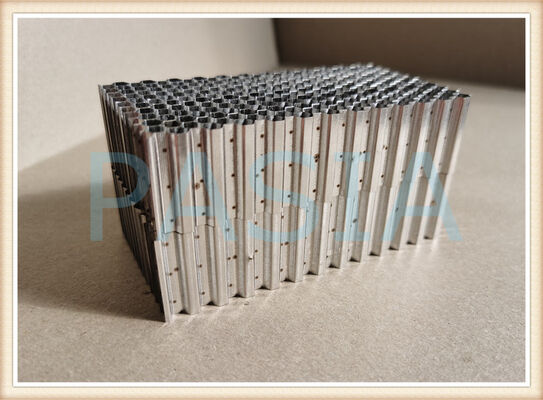
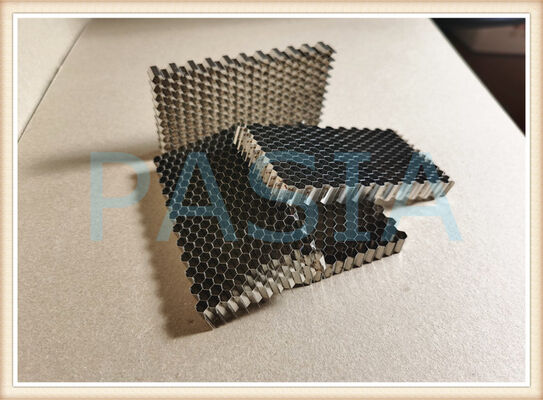
Fuel Saving Turbine Honeycomb Seal For Commercial Aircraft Engines
Fuel-Saving Turbine Honeycomb Seal — Engineered for Commercial Aircraft Engines
1. The Fuel Efficiency Challenge in Commercial Aviation
Fuel is the single largest operating cost for commercial airlines. A Boeing 747 burns approximately 5 gallons of fuel per mile — a total of 30,000 gallons (98 tonnes) on a flight between London and Hong Kong. For a typical commercial airliner, fuel costs represent 30-40% of total operating expenses. Even a 1% improvement in fuel efficiency translates into millions of dollars in annual savings per aircraft fleet.
The honeycomb seal ring is an extensively used component that has been proven to optimise the fuel efficiency of aero-engines. By sealing the radial gap between rotating blades and the turbine wall, it optimises both fuel consumption and service life.
This product is designed specifically for commercial aircraft engines — delivering measurable fuel savings, lower CO₂ emissions, and extended maintenance intervals.
2. How Honeycomb Seals Save Fuel
2.1 The Sealing Principle
During engine operation, rotor blades expand as temperature increases. The honeycomb seal ring provides a sacrificial abradable surface that allows rotating blades to cut into the seal, preserving the integrity of both blades and the turbine wall while achieving minimum possible radial clearance.
2.2 The Efficiency Impact
· Reduced leakage means more airflow is directed through the core flow path for thrust generation, rather than escaping around blade tips
· Tighter clearances maintained throughout the engine duty cycle reduce parasitic losses
· Lower specific fuel consumption (SFC) directly results from reduced leakage
2.3 Quantified Fuel Savings
Performance Metric Improvement
Leakage reduction vs. labyrinth seals ~30%
Stage efficiency improvement +0.6%
Turbine cylinder efficiency gain ~1% (when radial gap reduced from 1.5mm to 0.5mm)
Additional efficiency with rectangular-cellular design +0.5-1.0%
Leakage prevention under high-pressure conditions 40% better than traditional labyrinth seals
3. Commercial Aircraft Applications
3.1 Engine Platforms
This honeycomb seal is designed for all major commercial aircraft engine platforms, including:
Engine Family Aircraft Application Seal Requirement
CFM56-5B/-7B Airbus A320, Boeing 737 37 honeycomb seal segments per engine
LEAP-1A/-1B/-1C Airbus A320neo, Boeing 737 MAX Next-gen honeycomb geometry
GEnx Boeing 787 Dreamliner High-temperature turbine seals
Trent series Airbus A350, Boeing 777 Multi-stage sealing applications
The commercial aircraft sector alone requires 500-800 seals per engine, making honeycomb seals one of the most widely deployed sealing technologies in aviation.
Engineered for Precision – Technical Specifications
Our honeycomb seal product line supports the following flexible specifications:
| Parameter | Specification Range |
| Material Options | Stainless Steel, Haynes 214, Hastelloy X, High-Temperature Alloy, Carbon Steel |
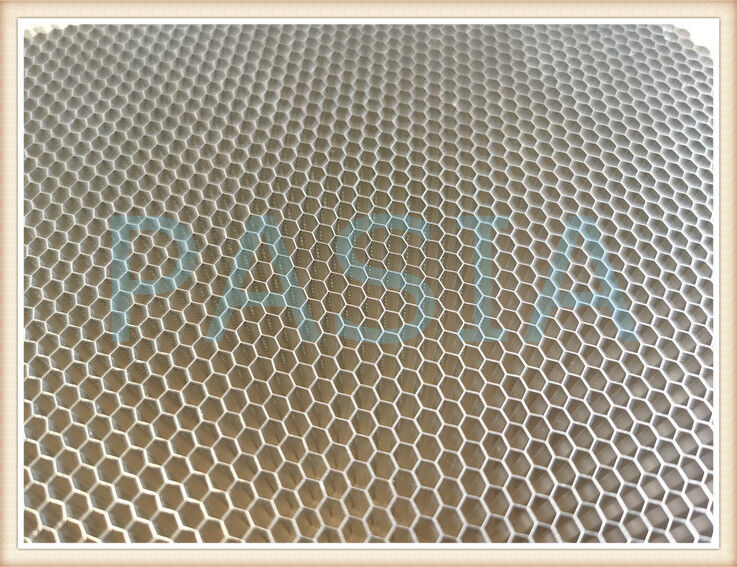
| Honeycomb Cell Size | 0.8 mm – 5.6 mm (0.8 mm, 1.6 mm, 2.0 mm, 3.2 mm, 4.2 mm, 5.6 mm, etc.) |
| Cell Wall Thickness | 0.08mm, 0.1mm, 0.13 mm, 0.15 mm, 0.2 mm (customizable) |
| Product Forms | Rings, Segments, Strips, Rectangular Sheets etc |
| Manufacturing Processes | Automatic Laser Welding, Vacuum Brazing etc |
Applications:
· Aerospace & Aviation Sealing: Ideal for aircraft jet engine compressors and turbine shrouds.
· Power Generation Gas Turbines: Used in combined-cycle power plants to minimize parasitic steam leakage, which reduces average heat
consumption by approximately 5 grams per kilowatt-hour of standard coal.
· Industrial Steam Turbines: Enhances rotor stability and dehumidification at blade tips, protecting components from moisture erosion.
· Wind Tunnel & Compressor Flow Straighteners: Ensures laminar airflow and reduces aerodynamic losses in high-speed test facilities.
· EMI/RFI Shielding: The metallic honeycomb structure also acts as an electromagnetic interference (EMI) shielding vent in sensitive electronic enclosures.
How Efficient is a Honeycomb Seal?
· Leakage Reduction: Compared to labyrinth seals, honeycomb sealing reduces steam/air volumetric leakage by an average of 30%-50% (while maintaining thinner clearances).
· Thermal Efficiency: For 600MW supercritical steam turbines, replacing traditional seals with honeycomb variants reduces heat consumption by approx. 5 grams of standard coal per kWh.
· Service Life: Due to excellent abrasion resistance and dynamic adaptability, the operational lifespan of a honeycomb seal is typically more than twice that of ordinary comb seals, significantly reducing maintenance downtime.
Why Choose This Honeycomb Seal – Real-World Expertise (EEAT Focus)
We are not a simple component distributor, but an original manufacturer with deep R&D and production capabilities in honeycomb products:
· In-house Expertise: With over 11 years of experience in design, manufacturing, and precision machining of metallic honeycomb structures, we independently handle everything from micro-cell honeycomb aero-engine components to large-scale steam turbine sealing rings.
· Proprietary Technologies: We are one of the few manufacturers in the industry that simultaneously operates automatic laser welding production lines and vacuum brazing technology. Vacuum brazing ensures an exceptionally strong bond between the honeycomb core and the backing plate – it will not delaminate even under continuous high‑temperature vibration.
· Quality Assurance: We strictly implement international quality management standards and hold GB/T 19001‑2016 / ISO 9001:2015 certification as well as GJB 9001C‑2017 (National Standard of China) certification, ensuring “‑grade quality” for our products.
· Global Case Studies – First‑Hand Evidence: Our honeycomb seals have been successfully applied in a gas turbine power plant retrofit project in Southeast Asia, as well as in the aero‑engine MRO (Maintenance, Repair, and Overhaul) supply chain in China. In one instance, we helped a gas turbine maintenance provider reduce rotor tip clearance leakage by 37%, significantly extending the thermal cycle life of the blades.
Advantages
| 1 | Very low cross coupling |
| 2 | Higher direct damping that labyrinth seals |
| 3 | More forgiving than labyrinth seals in the event of a rotor-stator rub |
| 4 | Variety of materials available to serve a wide range of applications |
| 5 | Capable of sustaining higher temperatures than conventional labyrinth seals |